
Event Overview
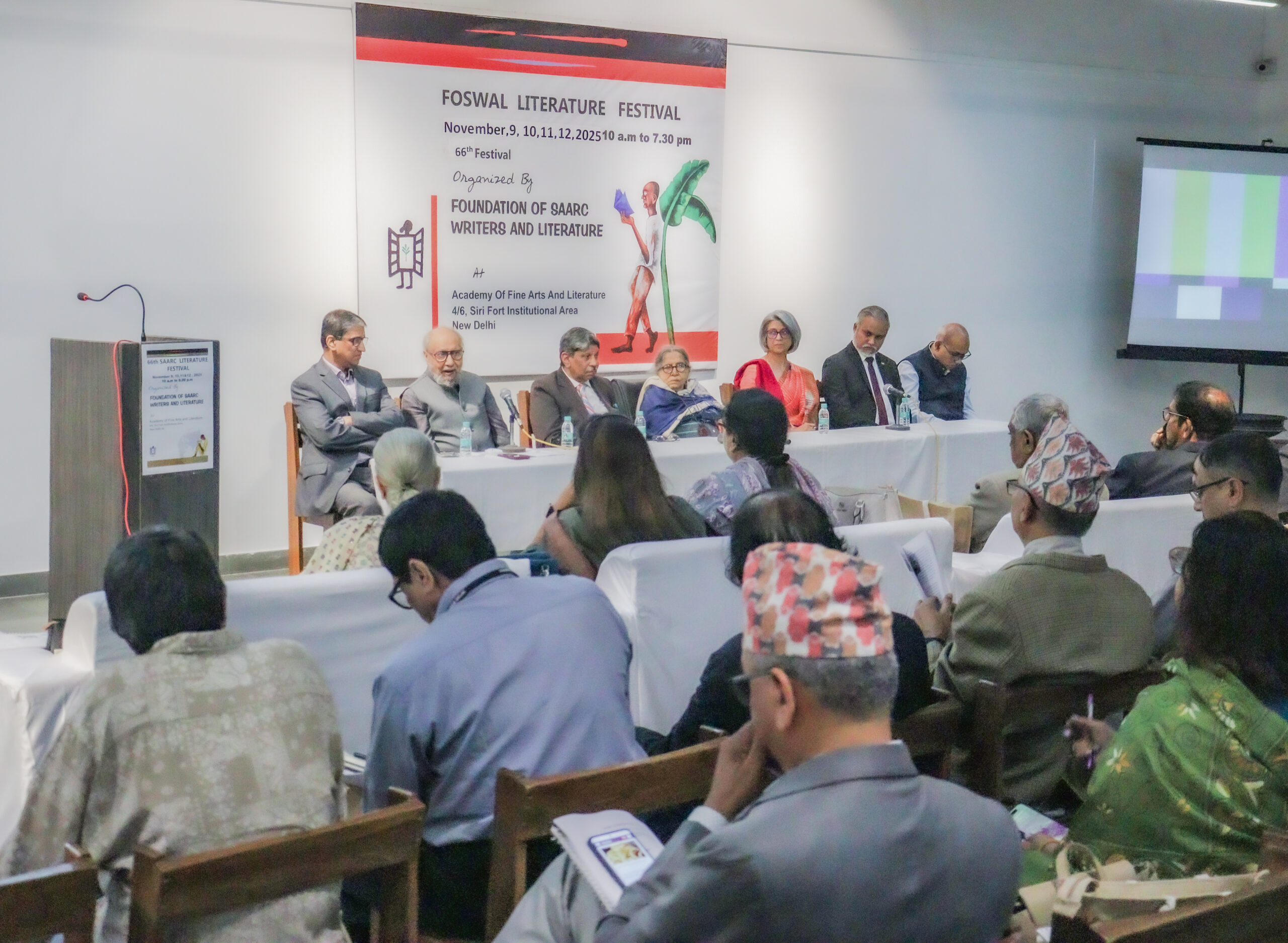
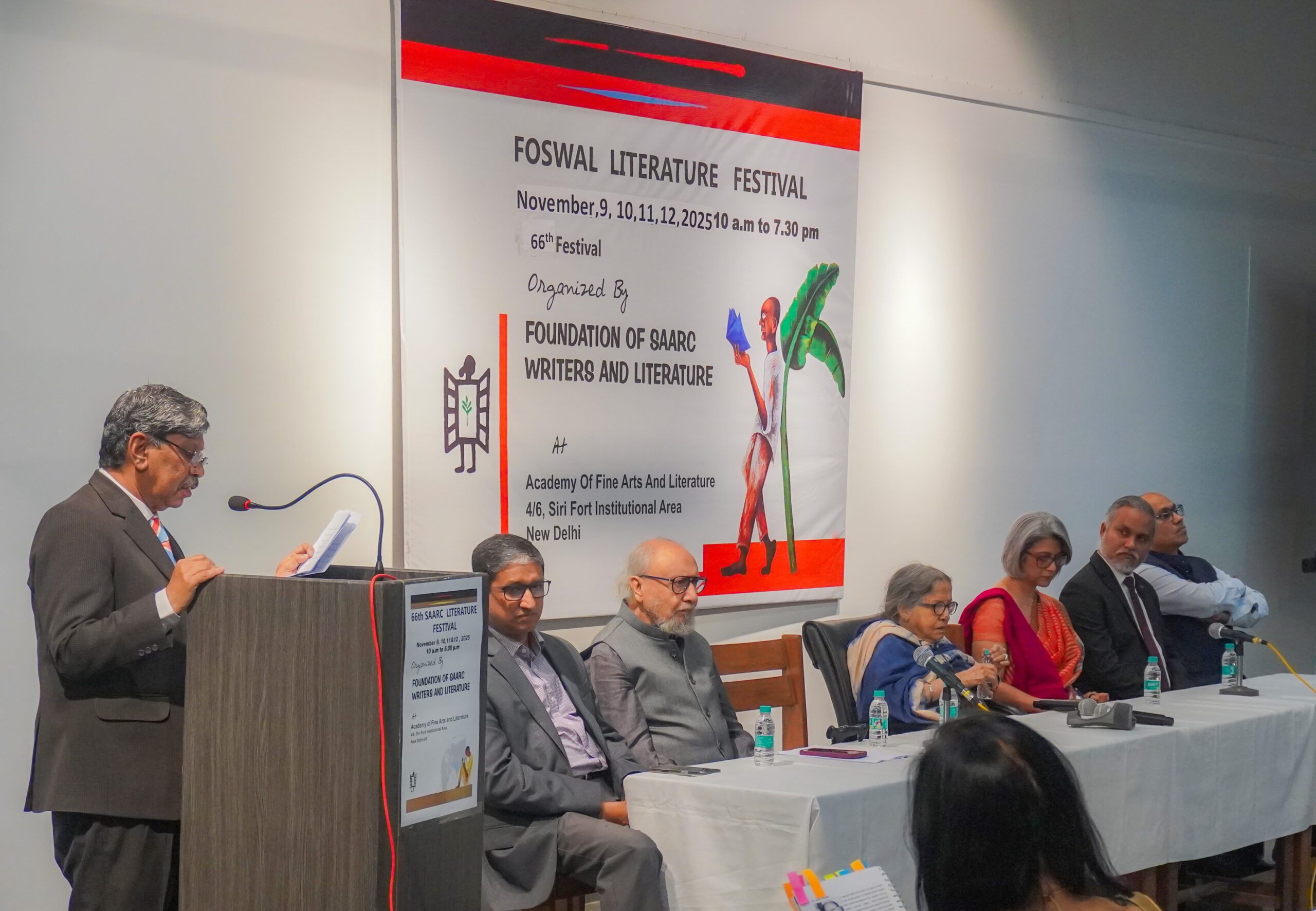
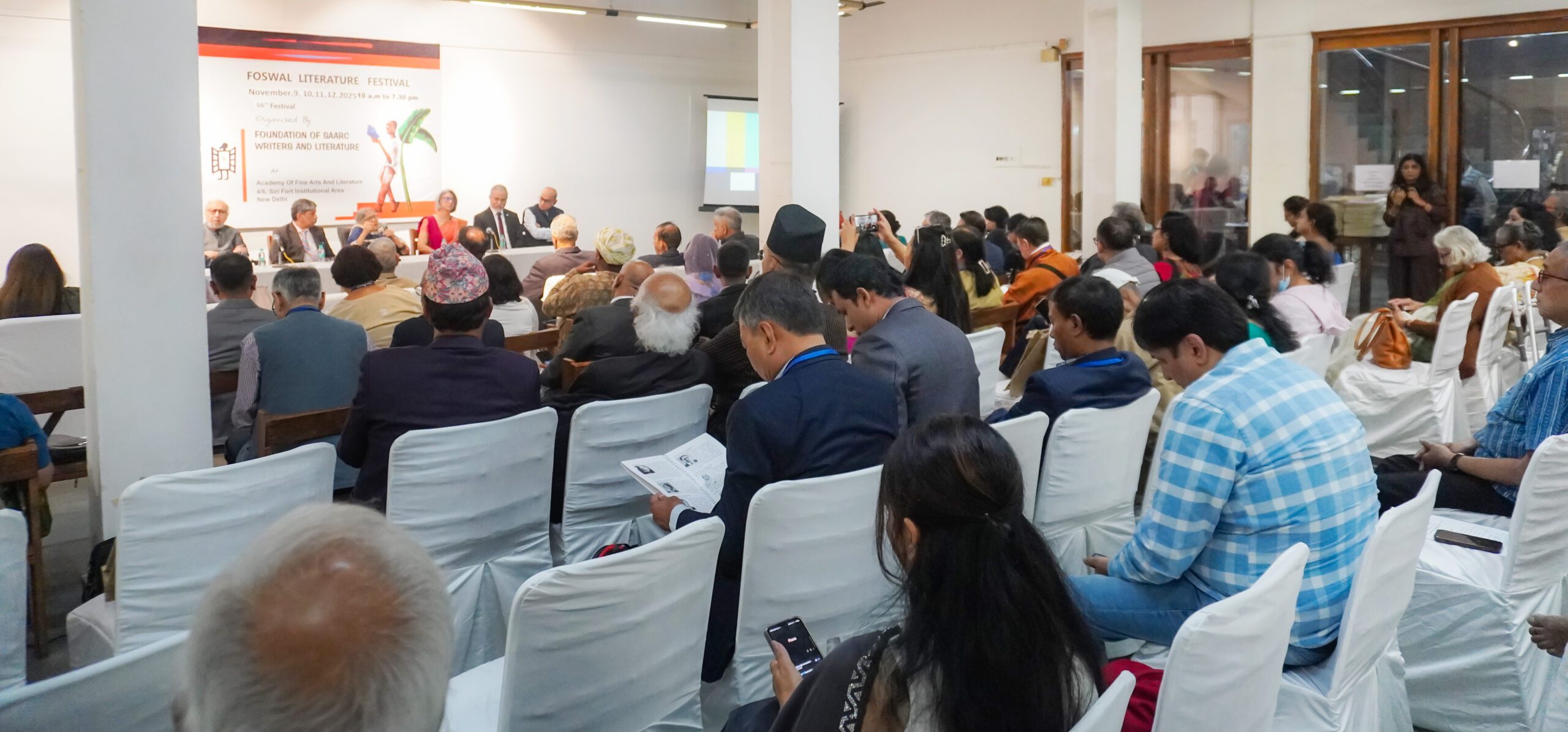
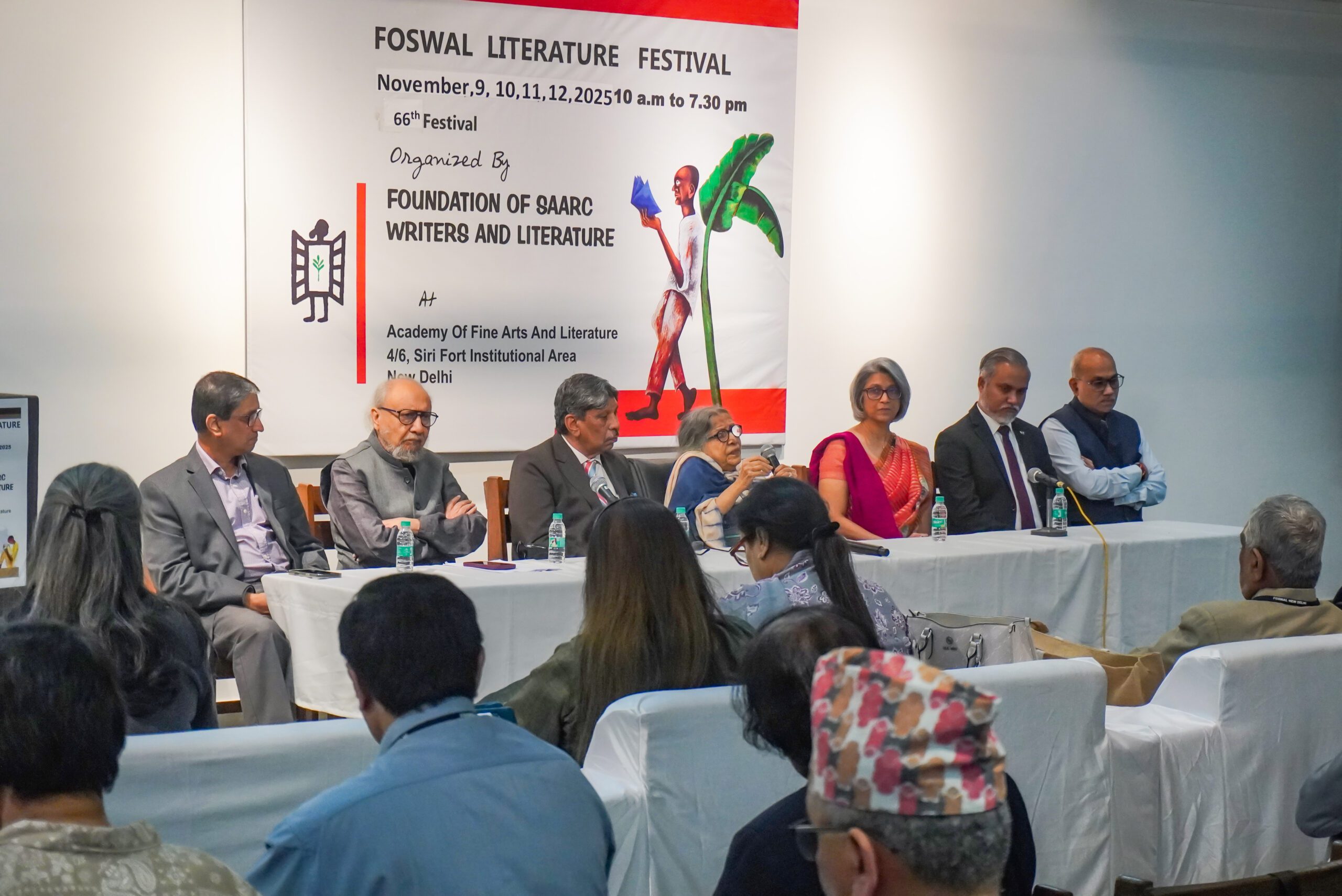
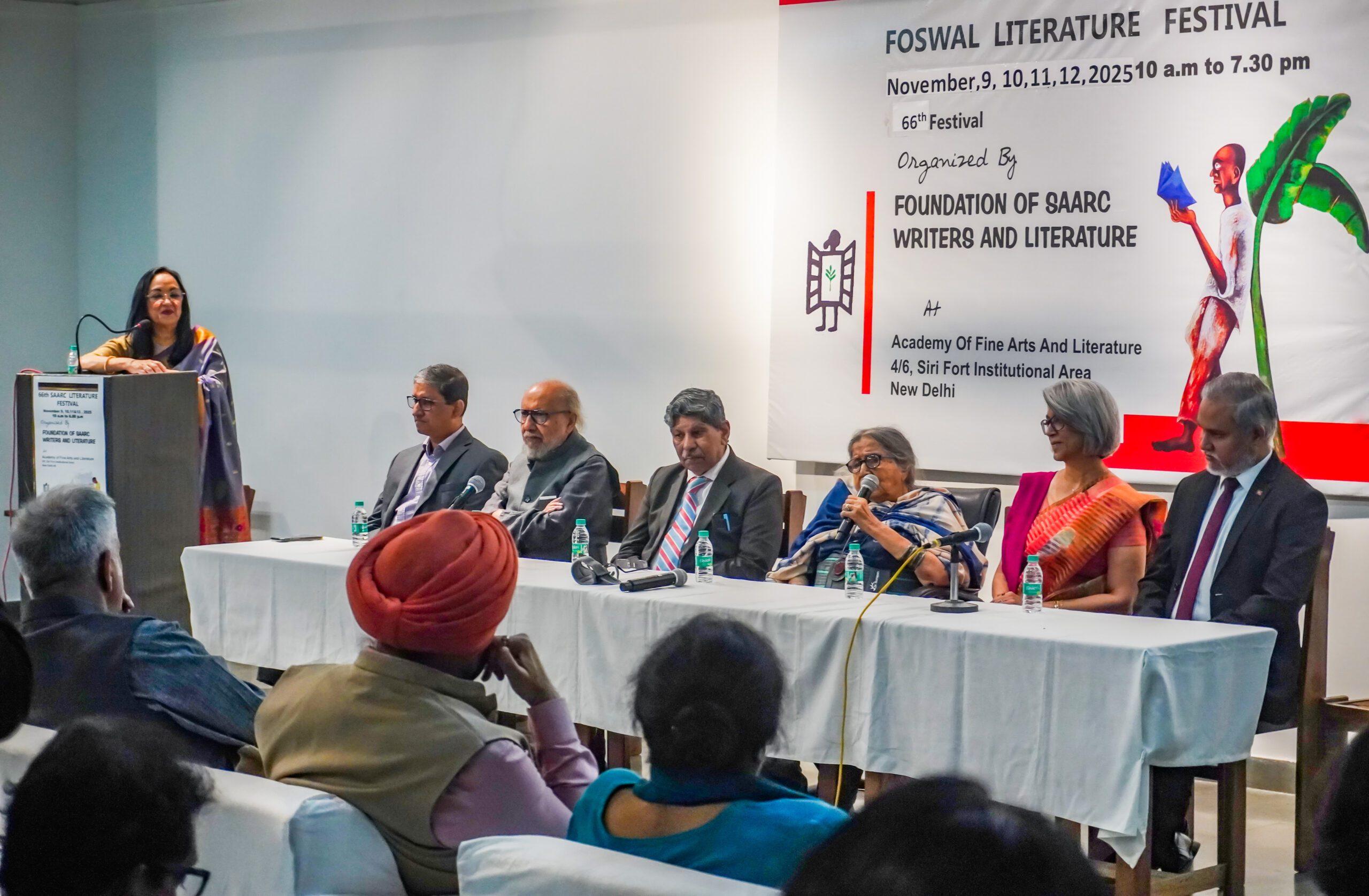
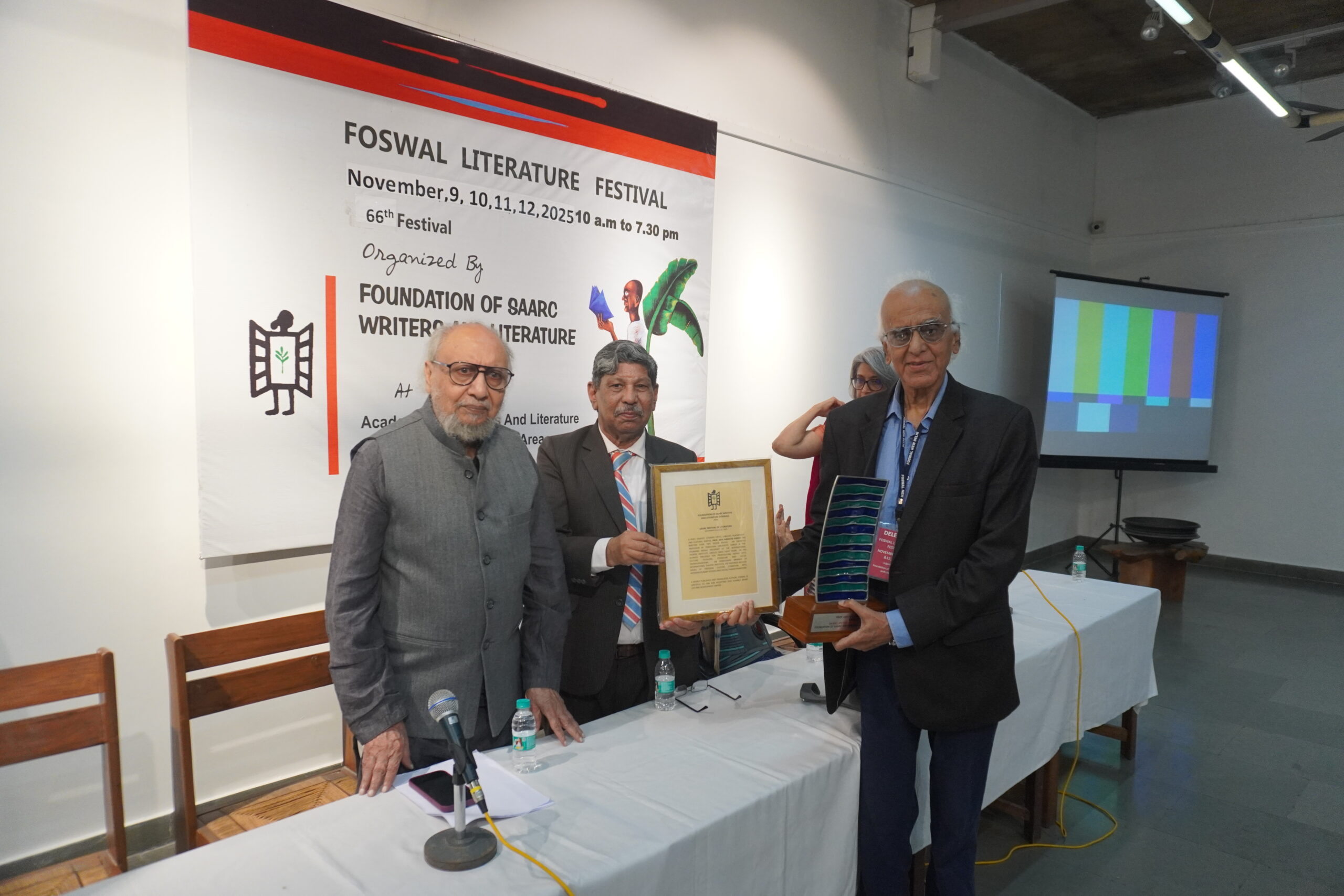
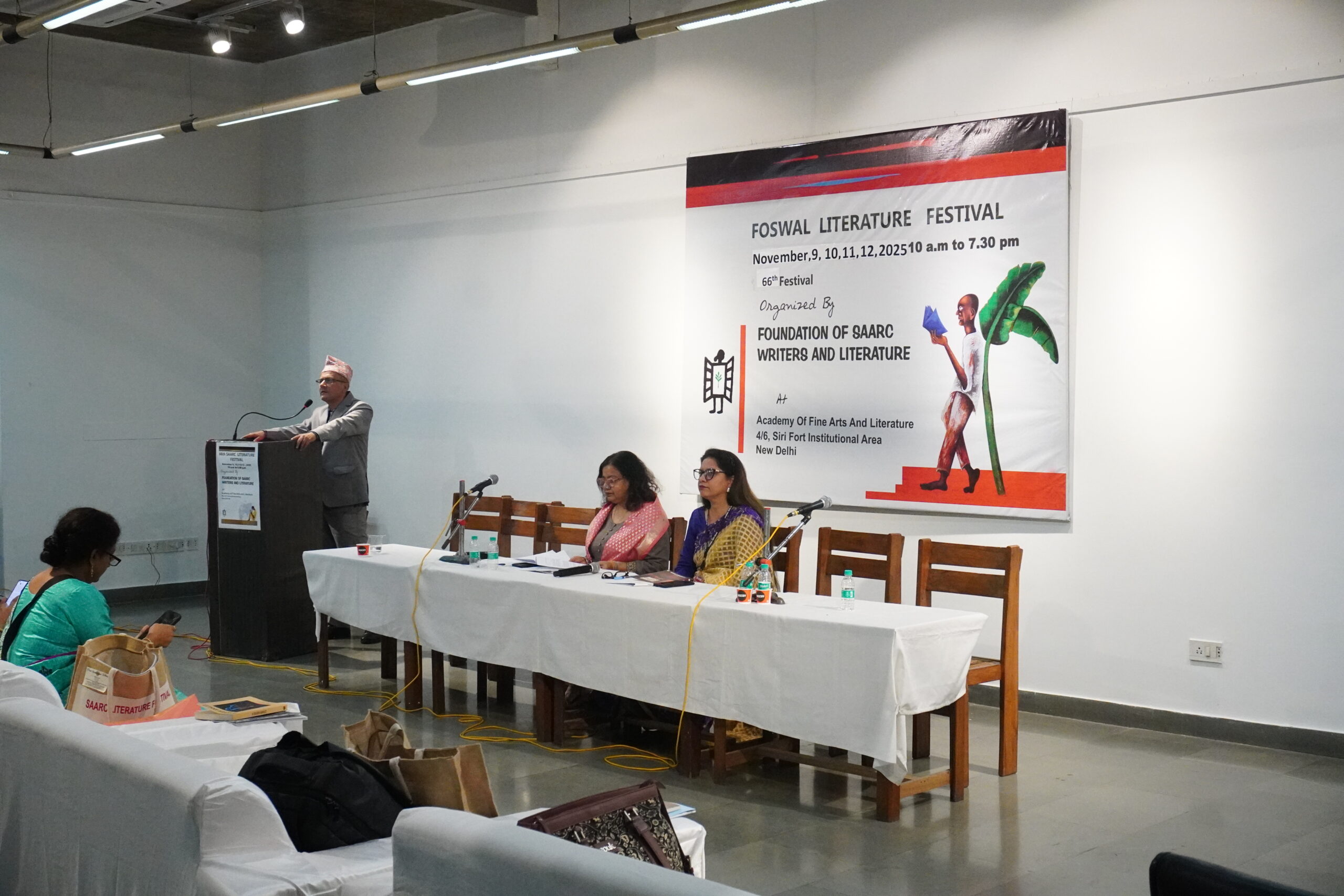
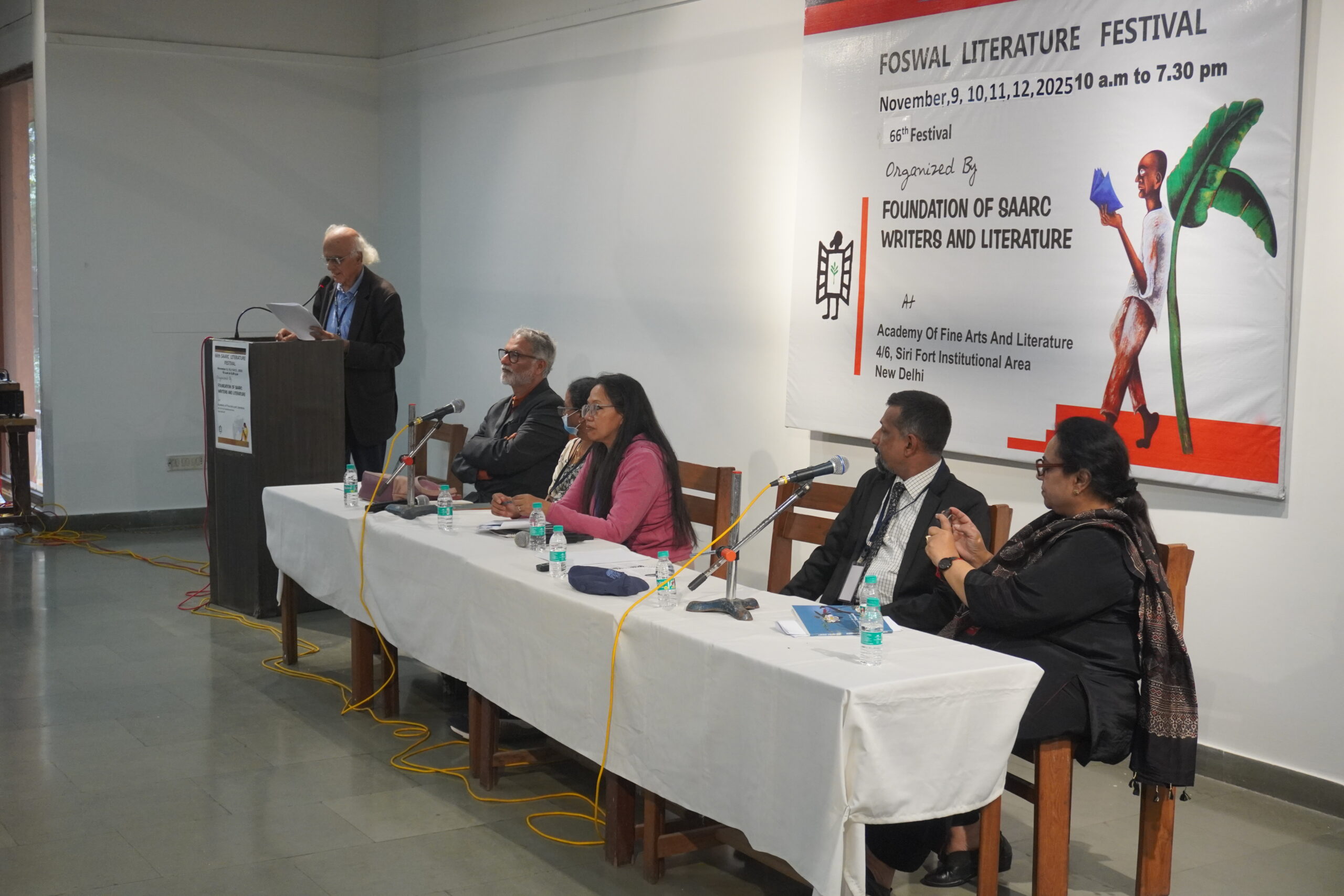
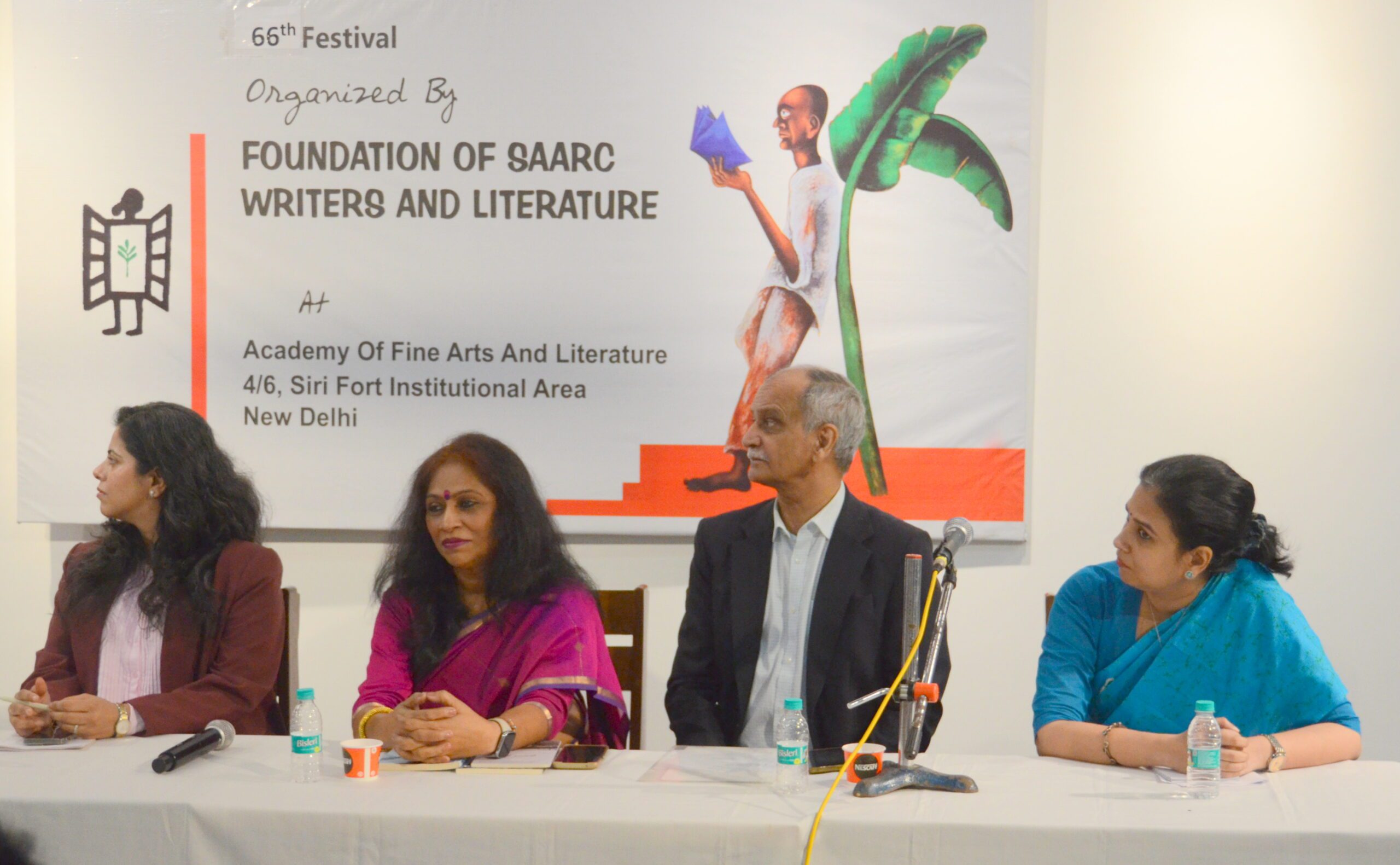
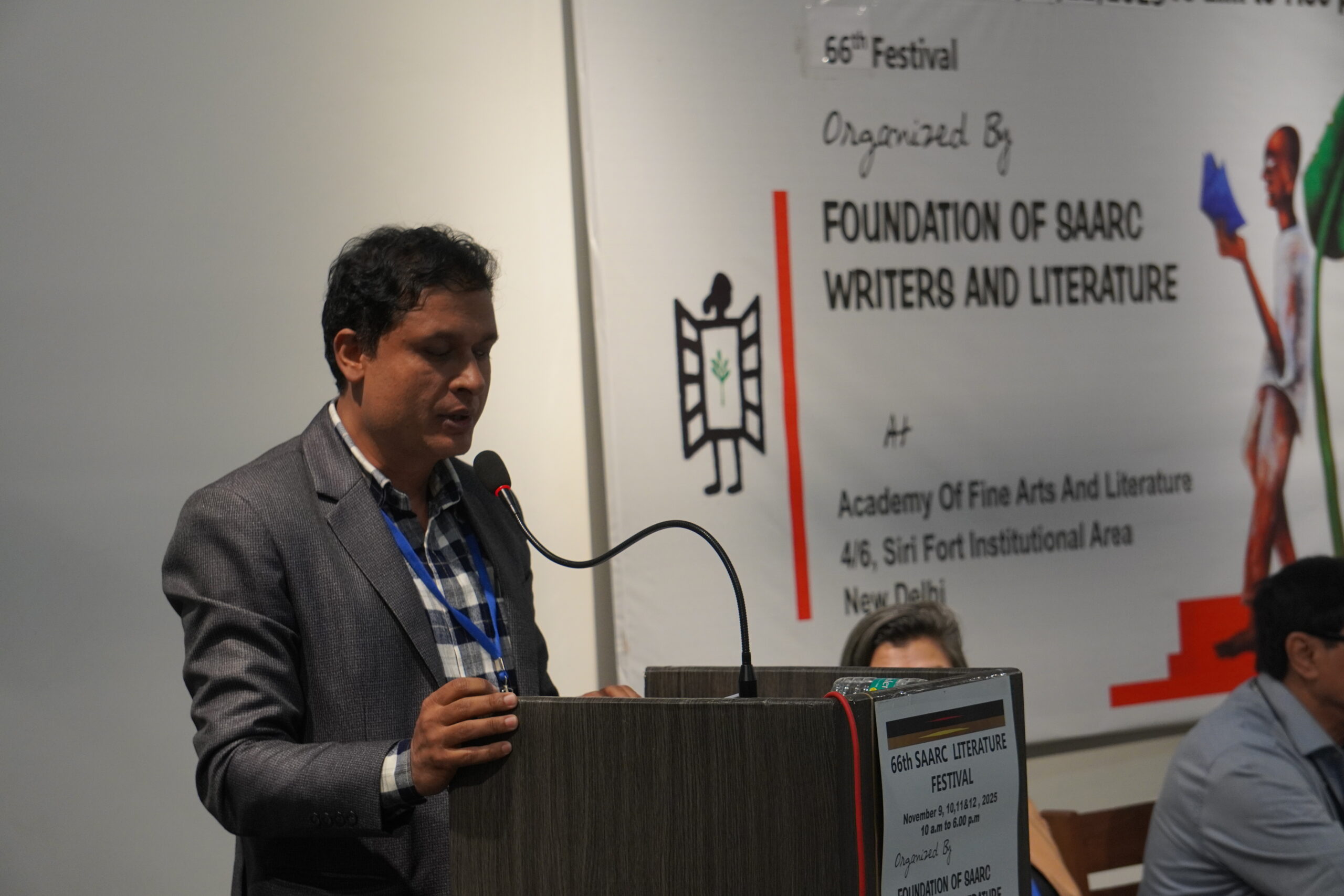
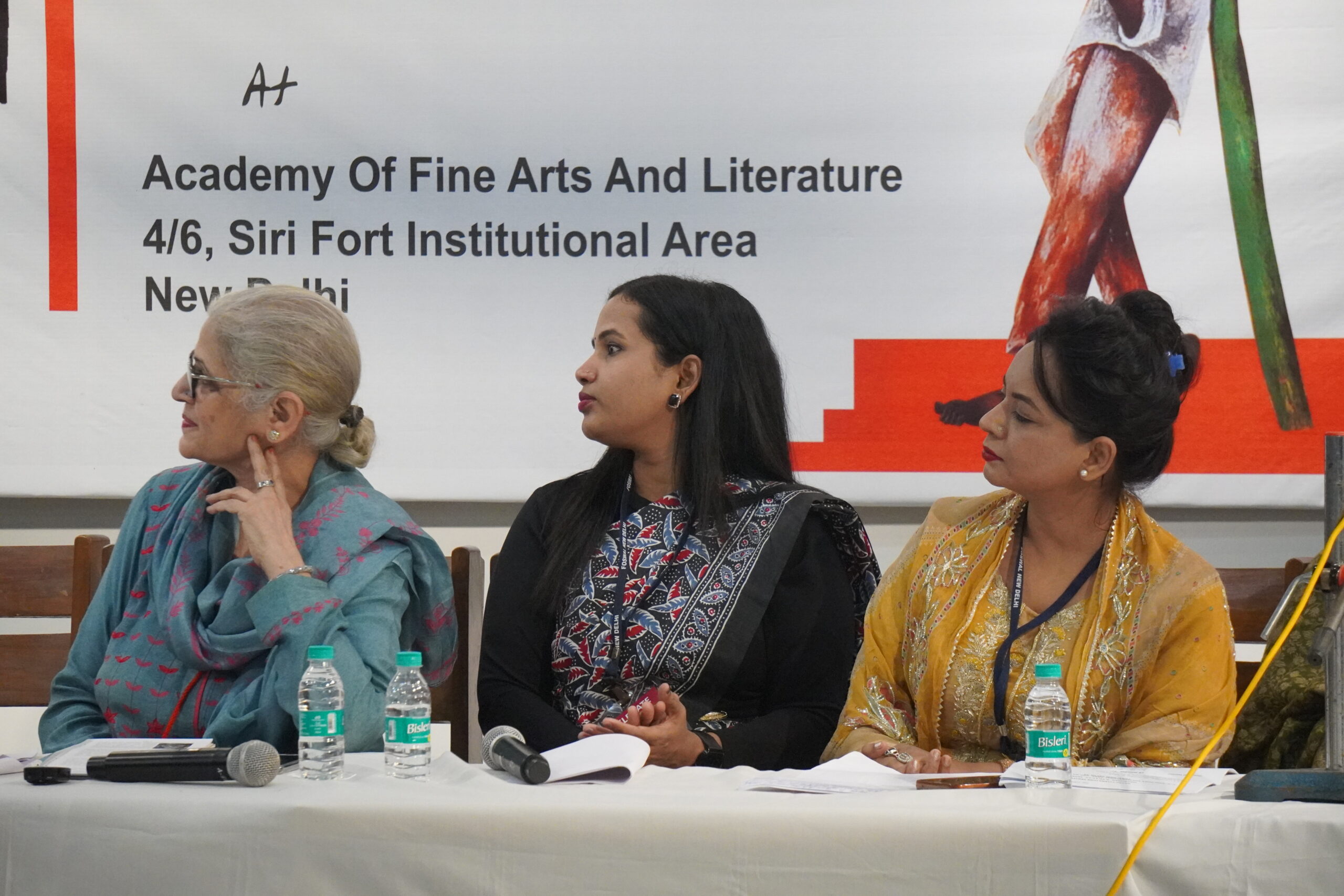
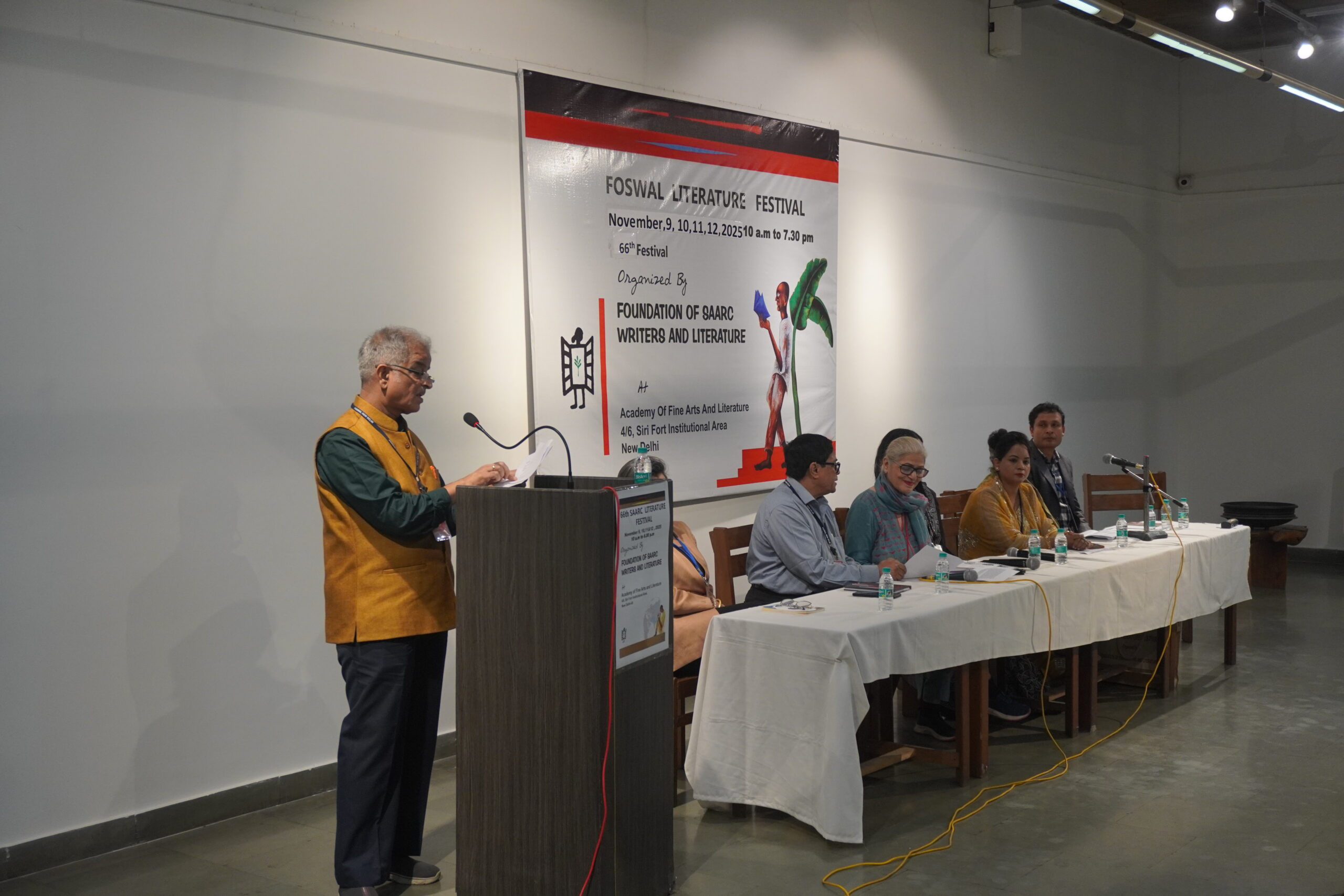
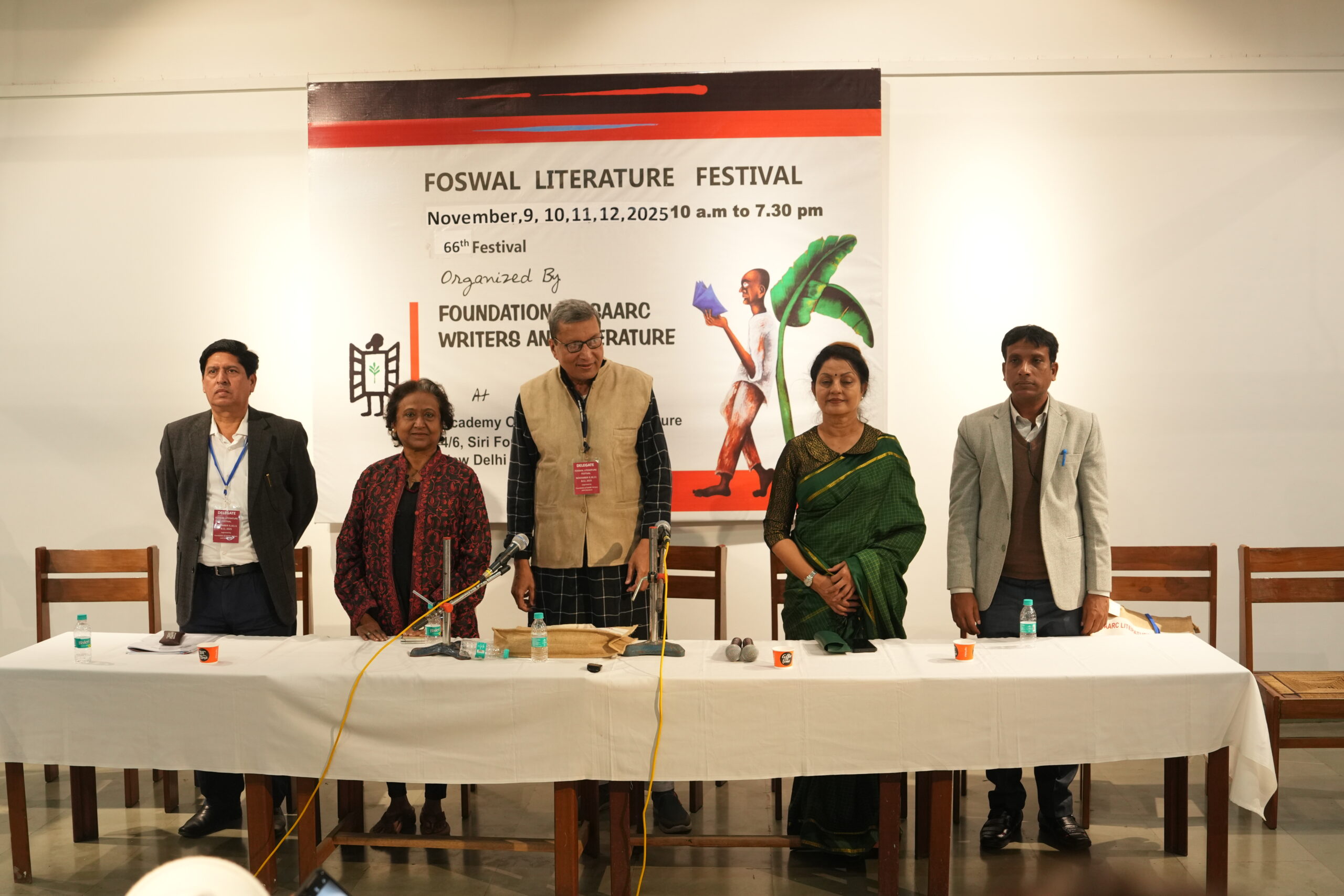
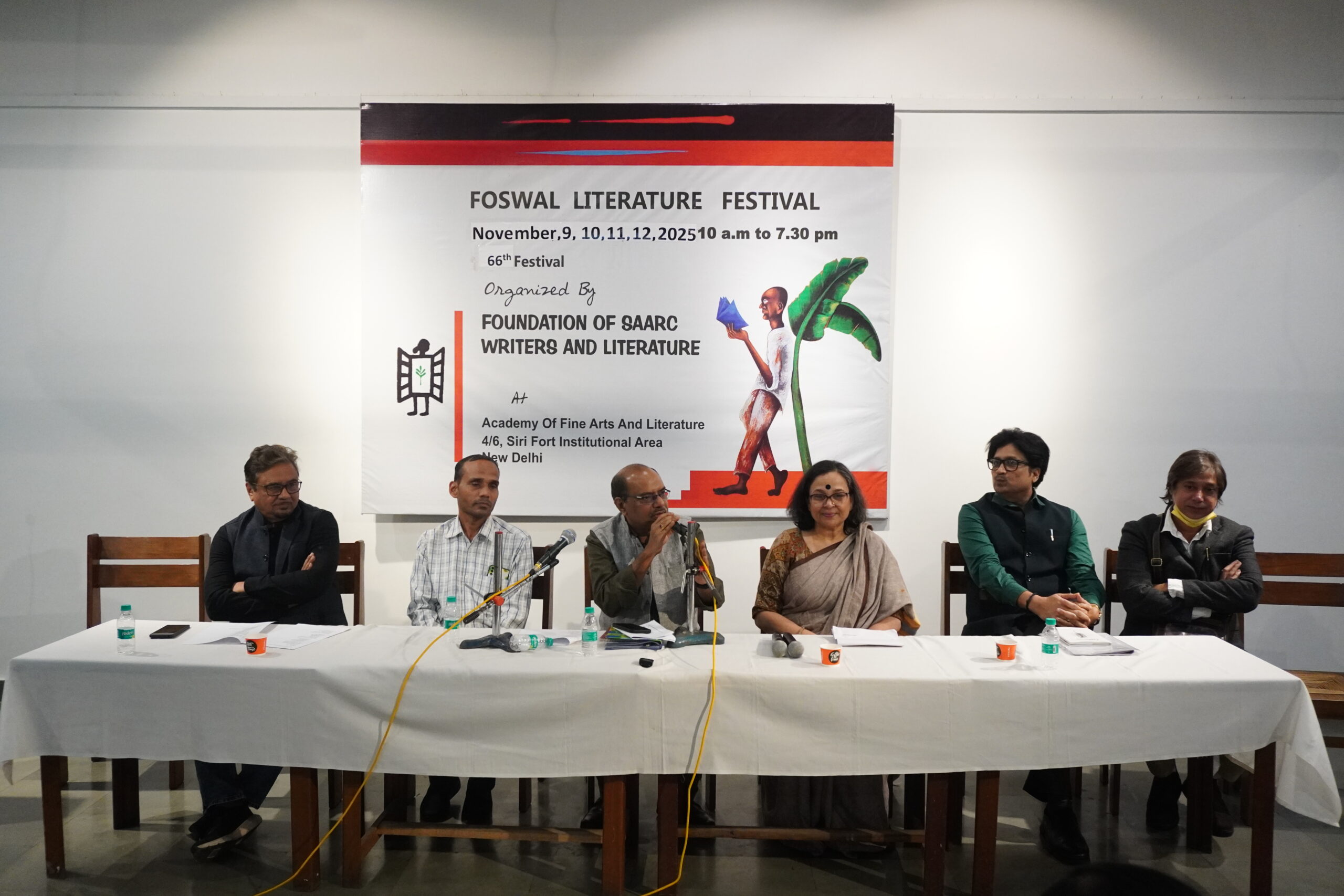
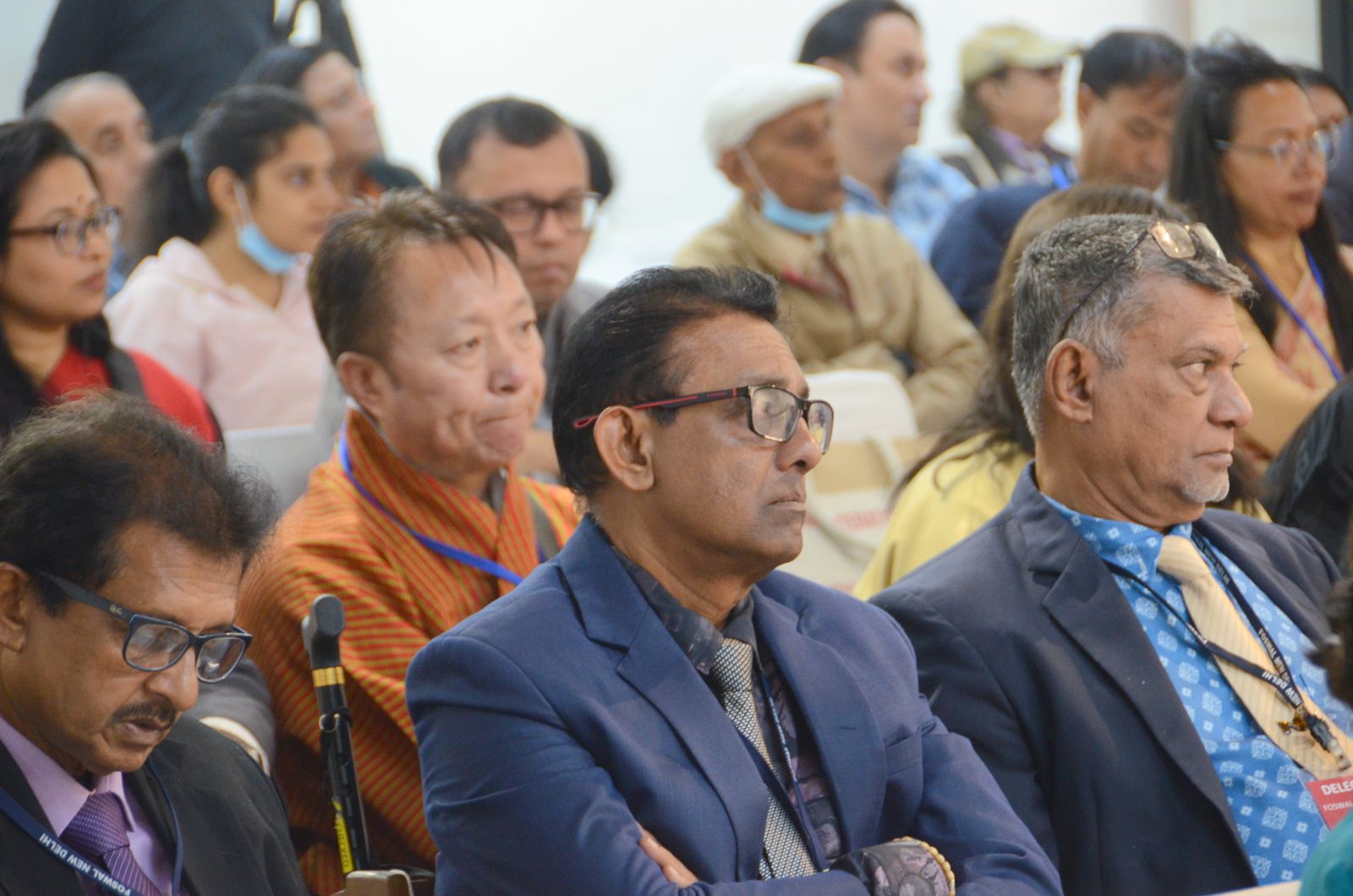
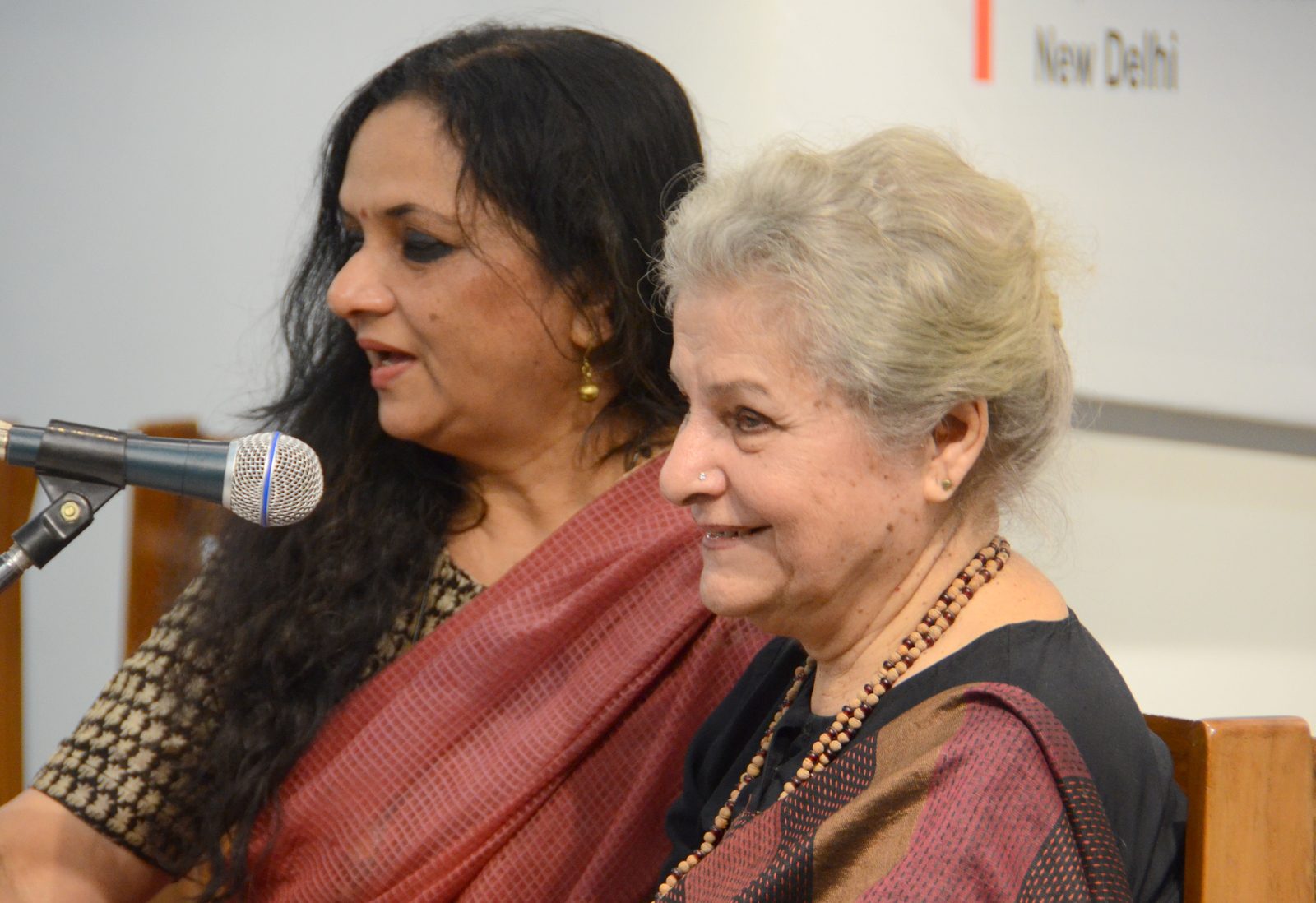
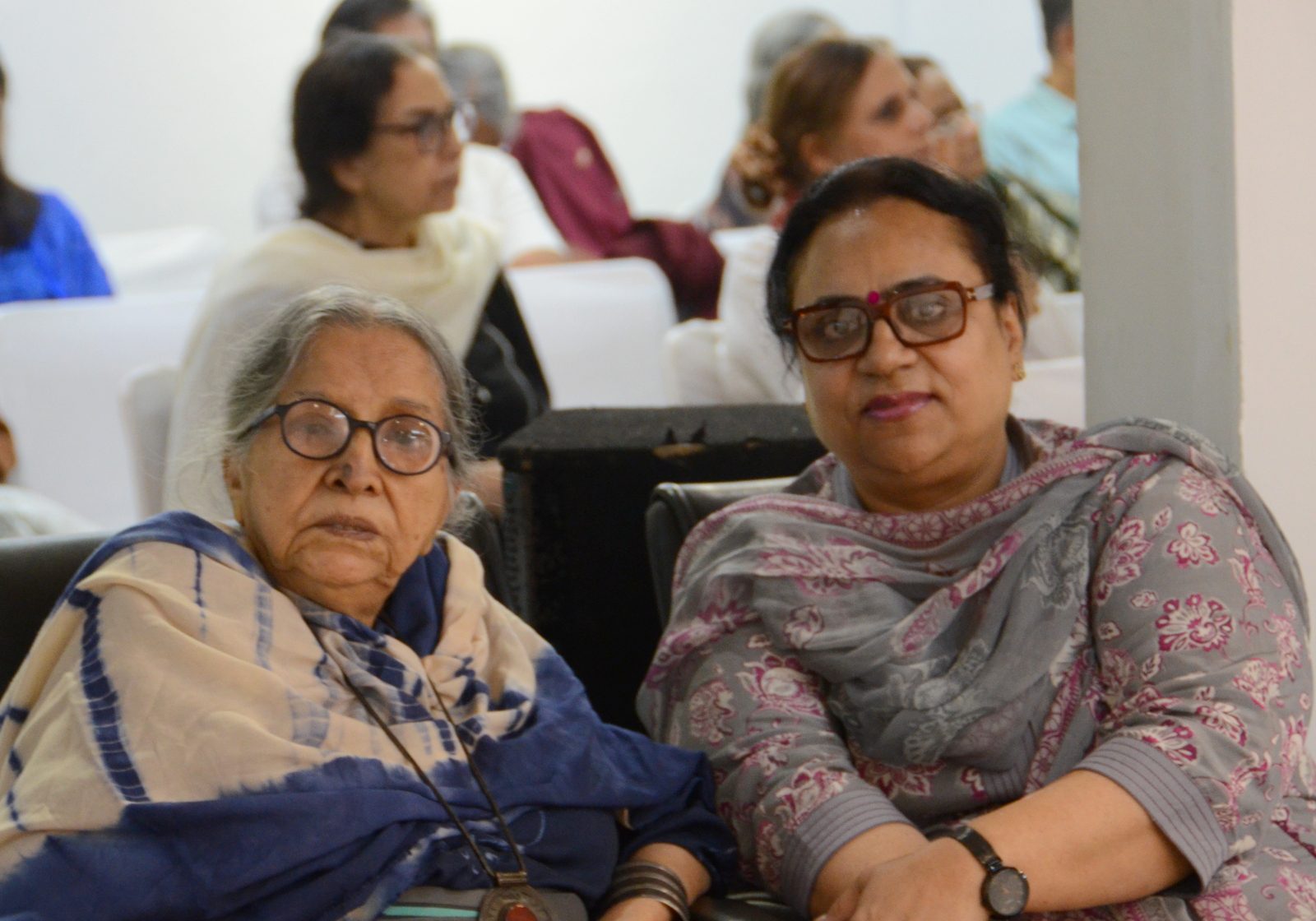
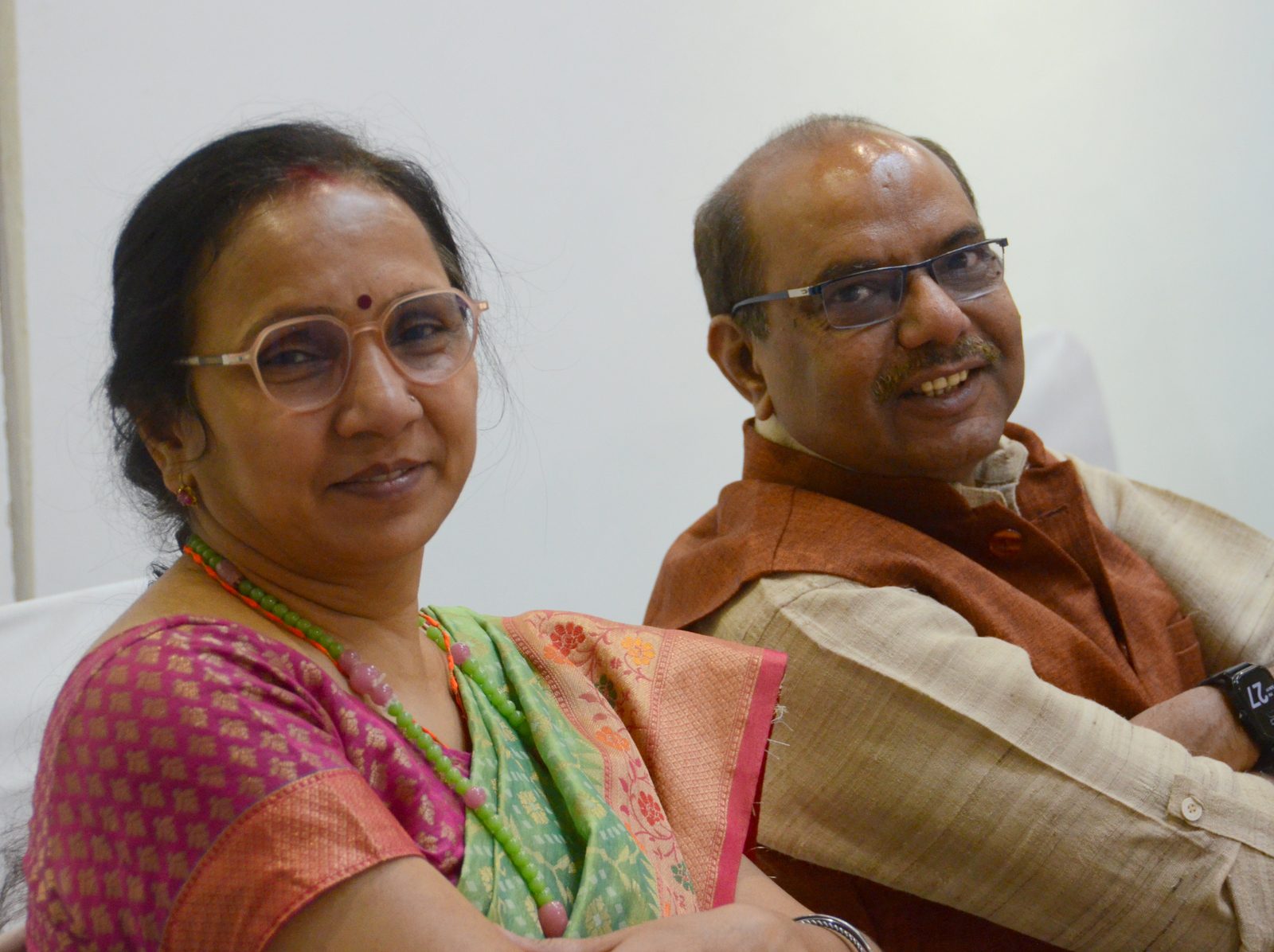
The 66th SAARC Literature Festival, held from 9–12 November 2025, brought together eminent writers, poets, scholars, diplomats, and cultural icons from across South Asia at the Academy of Fine Arts & Literature, New Delhi.
The festival opened with distinguished dignitaries including:
Ajeet Cour – President, FOSWAL
Dr. Madhav Kaushik – President, Sahitya Akademi
Prof. Ashis Nandy – Internationally renowned scholar
High Commissioners of Sri Lanka, Bangladesh, Nepal, and Maldives
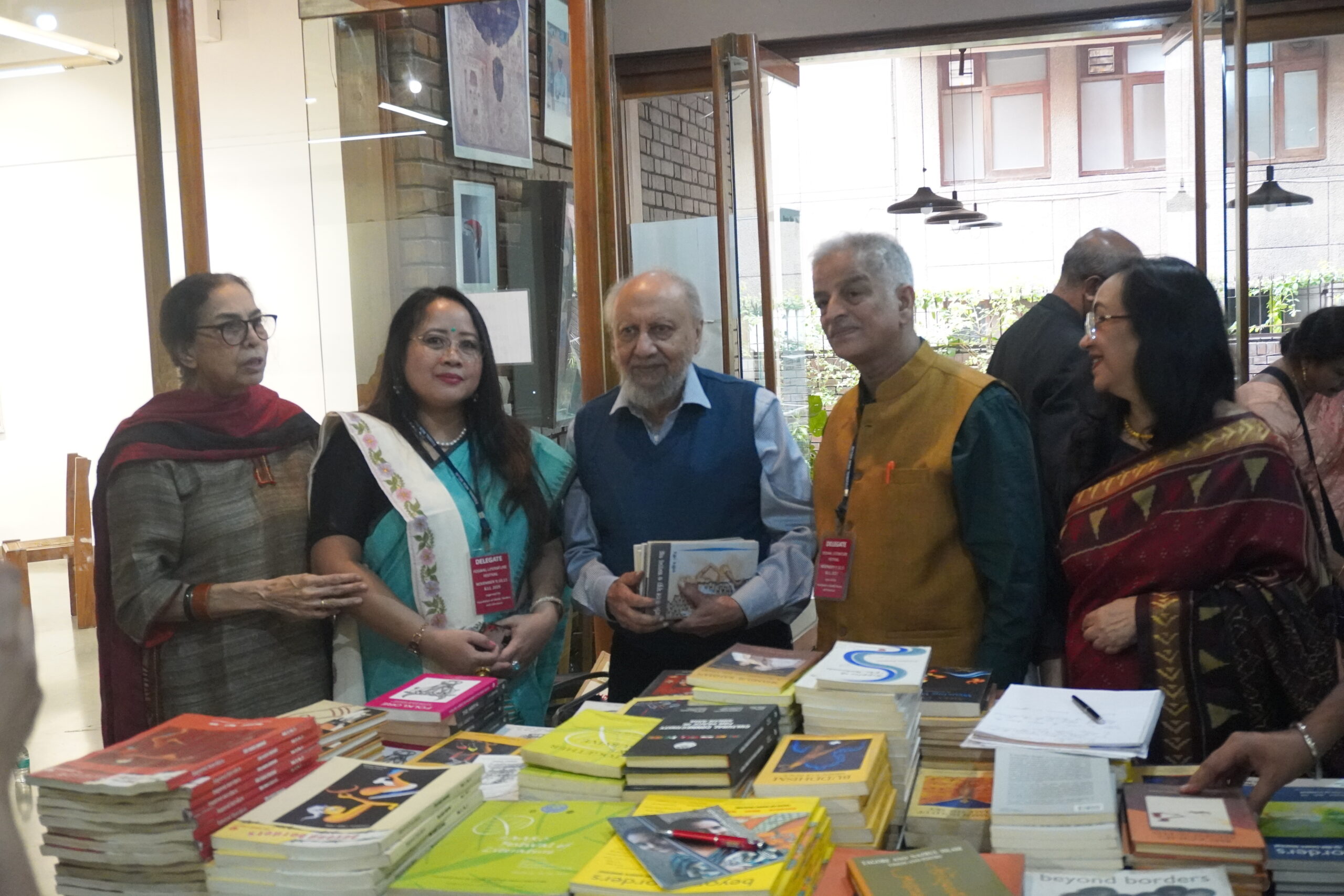
The festival celebrated four days of poetry, fiction, papers, cultural conversations, book launches, film screenings, and cross-border dialogues, emphasizing themes such as:
Cultural Connectivity in South Asia
Peace-building through Literature
Translation as a bridge between civilisations
Shared histories, identities, and human values
A special film on the life and literary journey of Ajeet Cour was screened, and the event featured powerful sessions on women’s writing, classical poetry traditions, South Asian folklore, and contemporary literary discourse.
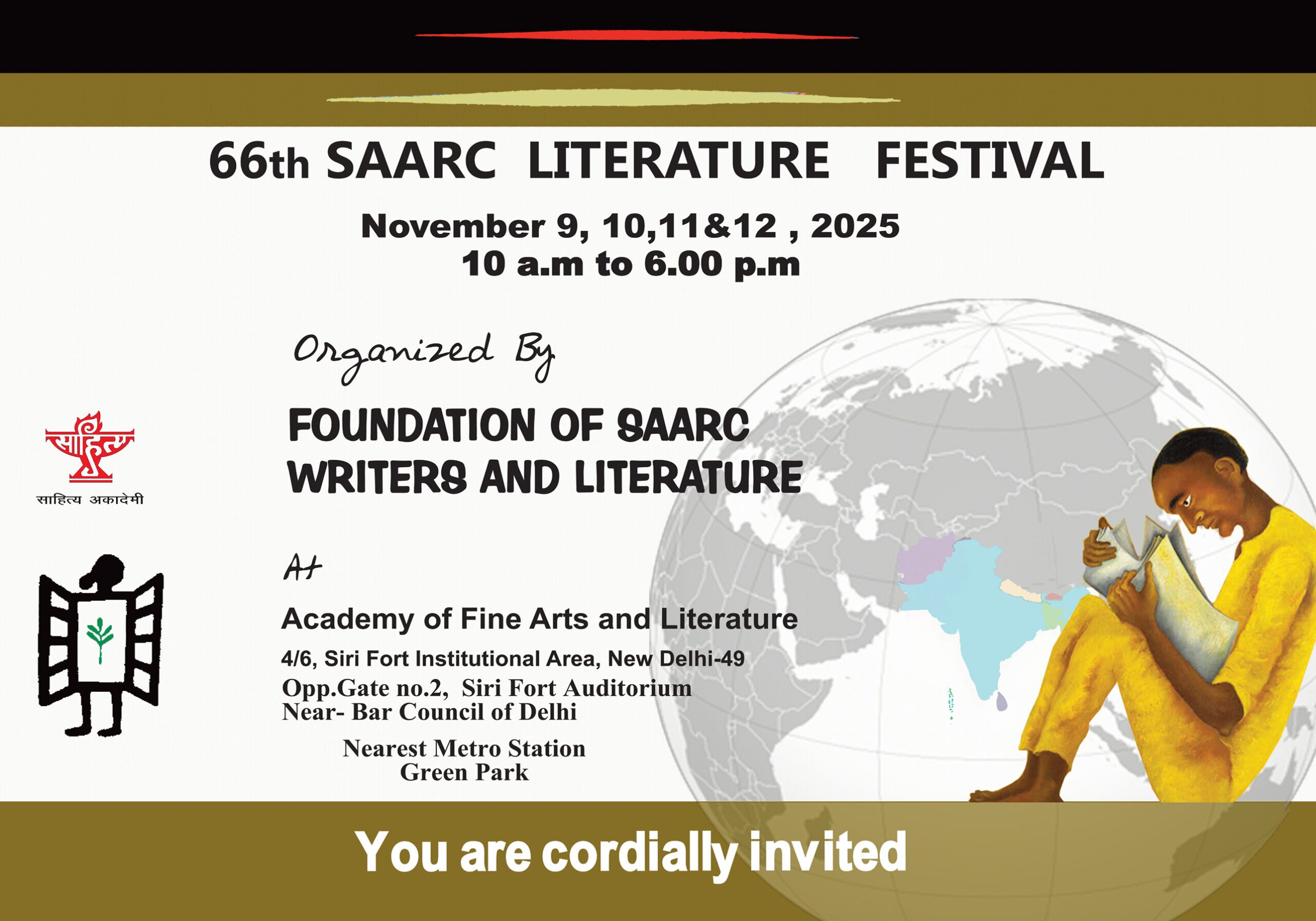
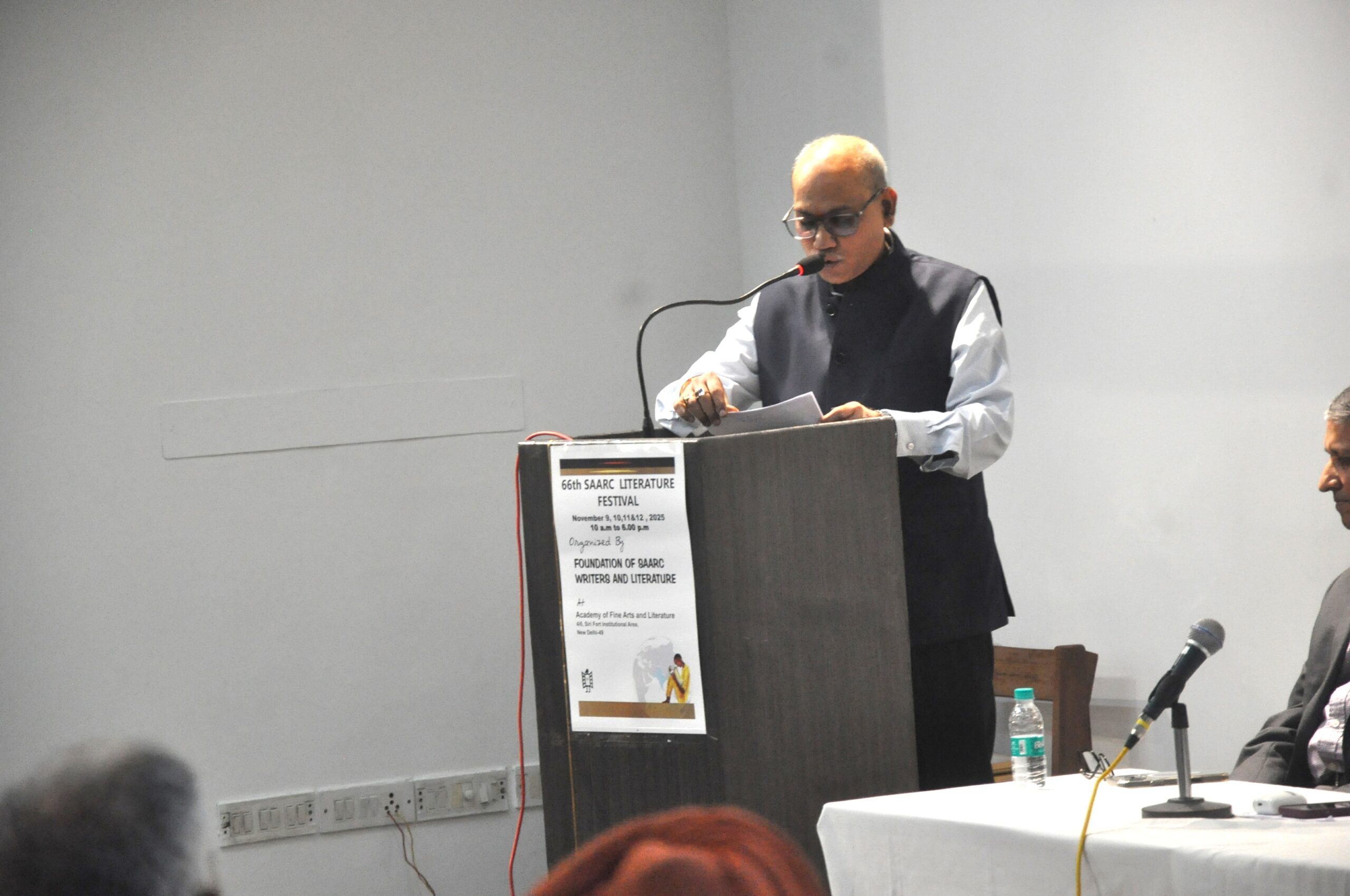
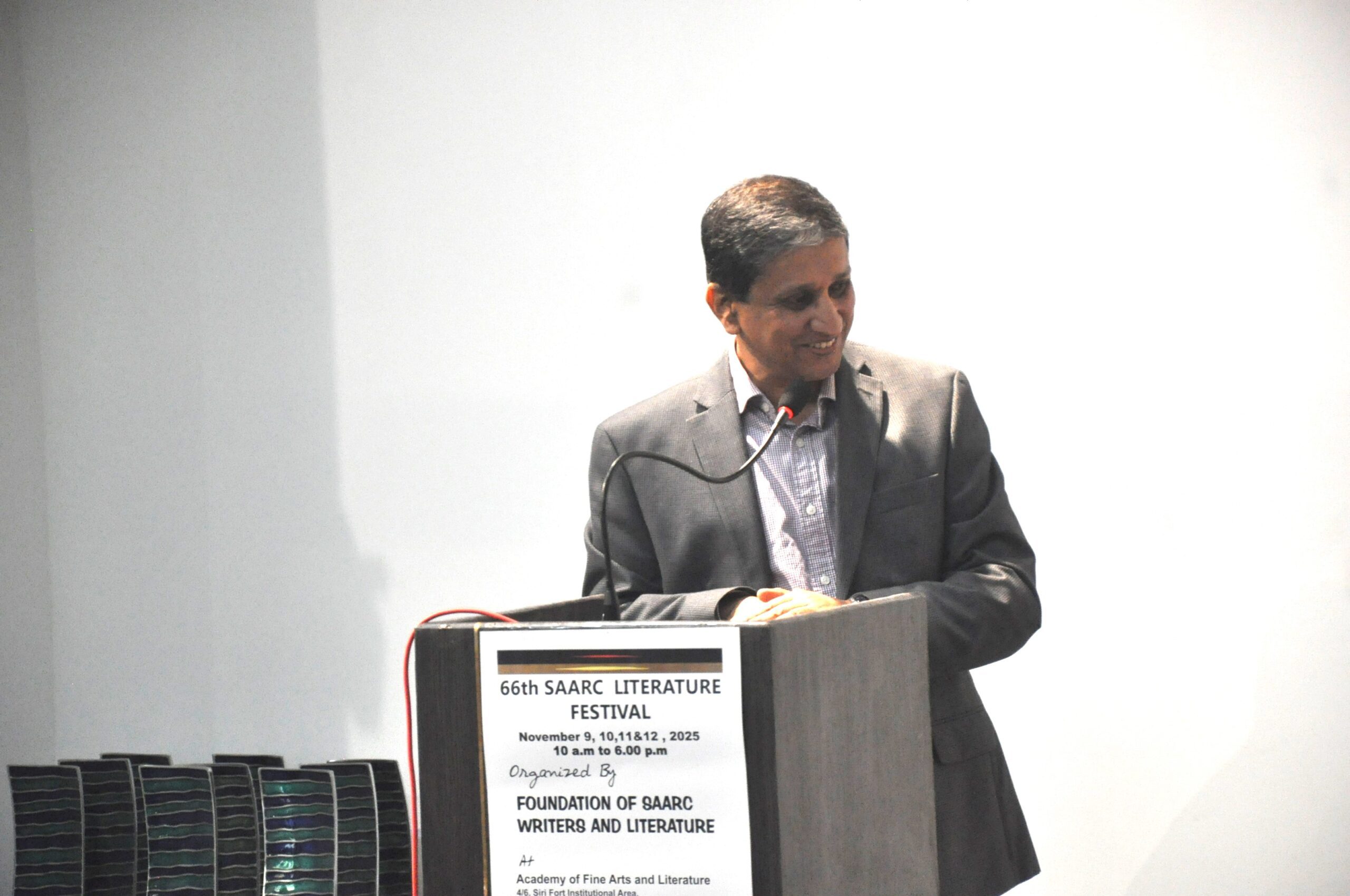
Key Dignitaries and Speakers
Inaugural Dignitaries
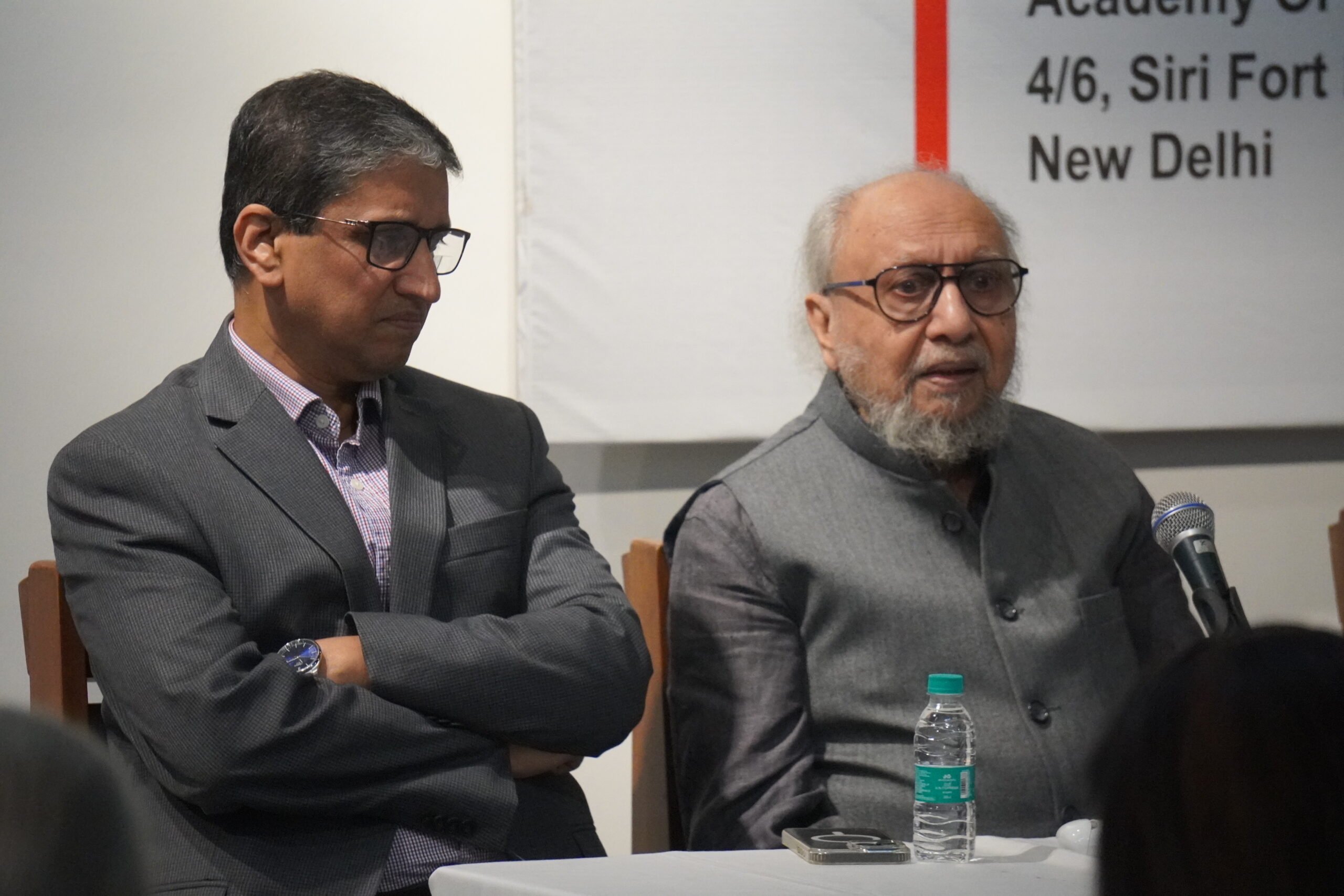
Prof. Ashis Nandy – Keynote Speaker
Dr. Madhav Kaushik – Chief Guest
Ms. Mahishini Colonne – High Commissioner of Sri Lanka
Mr. Riaz Hamidullah – High Commissioner of Bangladesh
Dr. Shankar Prasad Sharma – Ambassador of Nepal
Ms. Aishath Azeema – High Commissioner of Maldives
Dr. K.S. Rao – Sahitya Akademi
Lifetime Achievement Awardees
Prof. Abhi Subedi (Nepal)
Prof. Ashis Nandy (India)
Dr. Madhav Kaushik (India)
SAARC Literature Awardees
Anurasiri Hettige (Sri Lanka)
Faridur Rahman (Bangladesh)
Ibrahim Waheed (Maldives)
Kamrul Hassan (Bangladesh)
Laxmi Mali (Nepal)
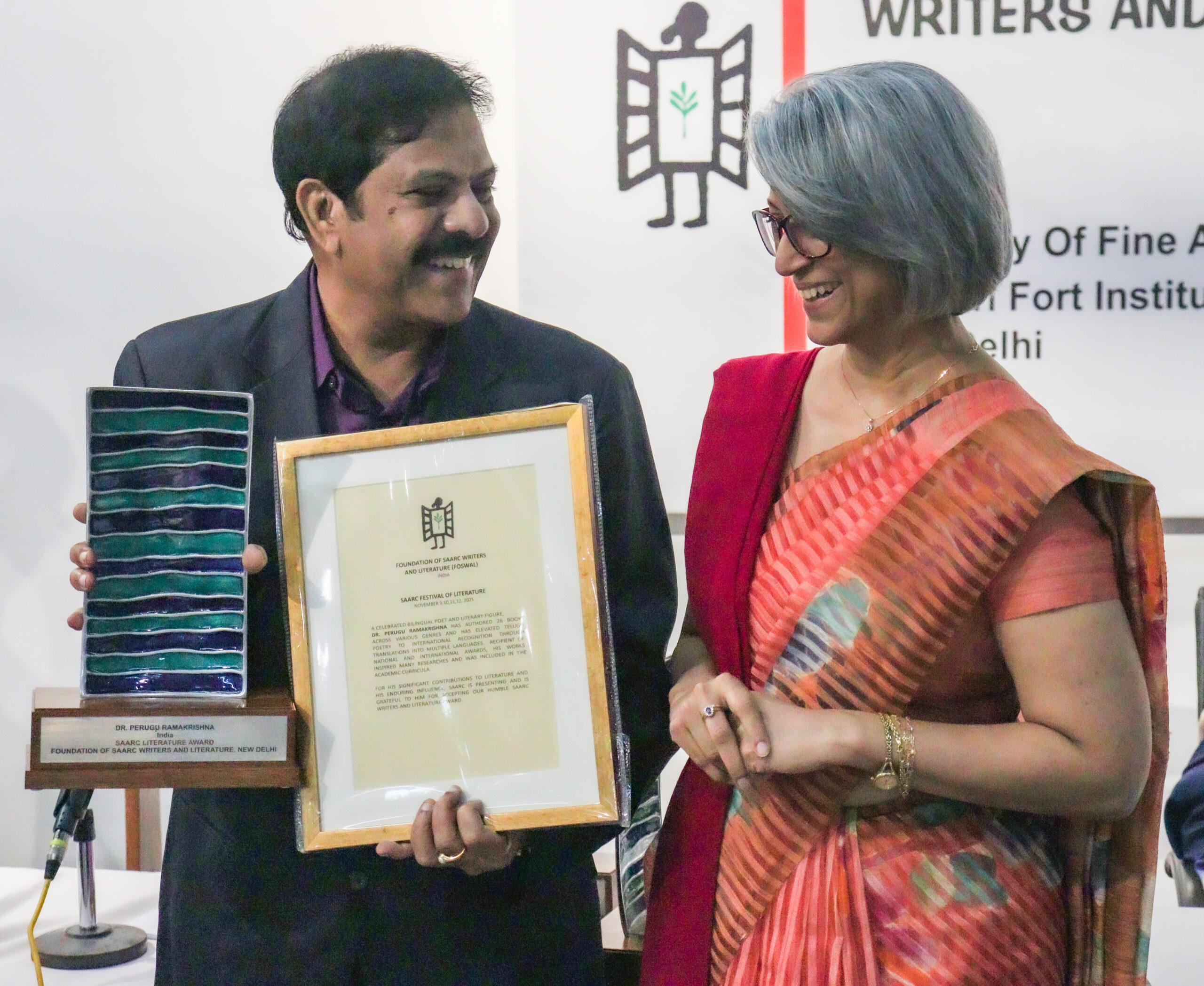
Dr. Ramakrishna Perugu (India)
Special Appearance
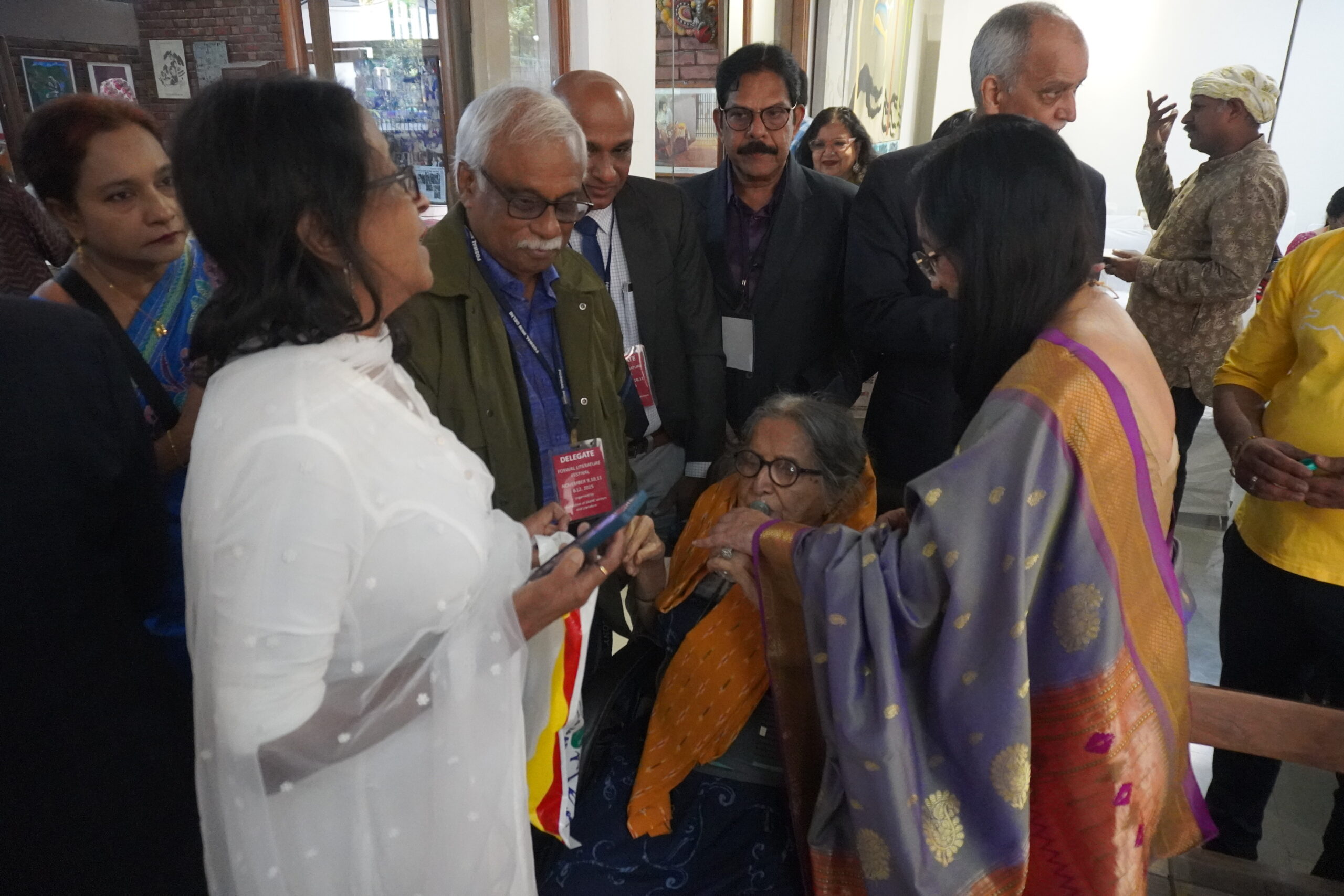
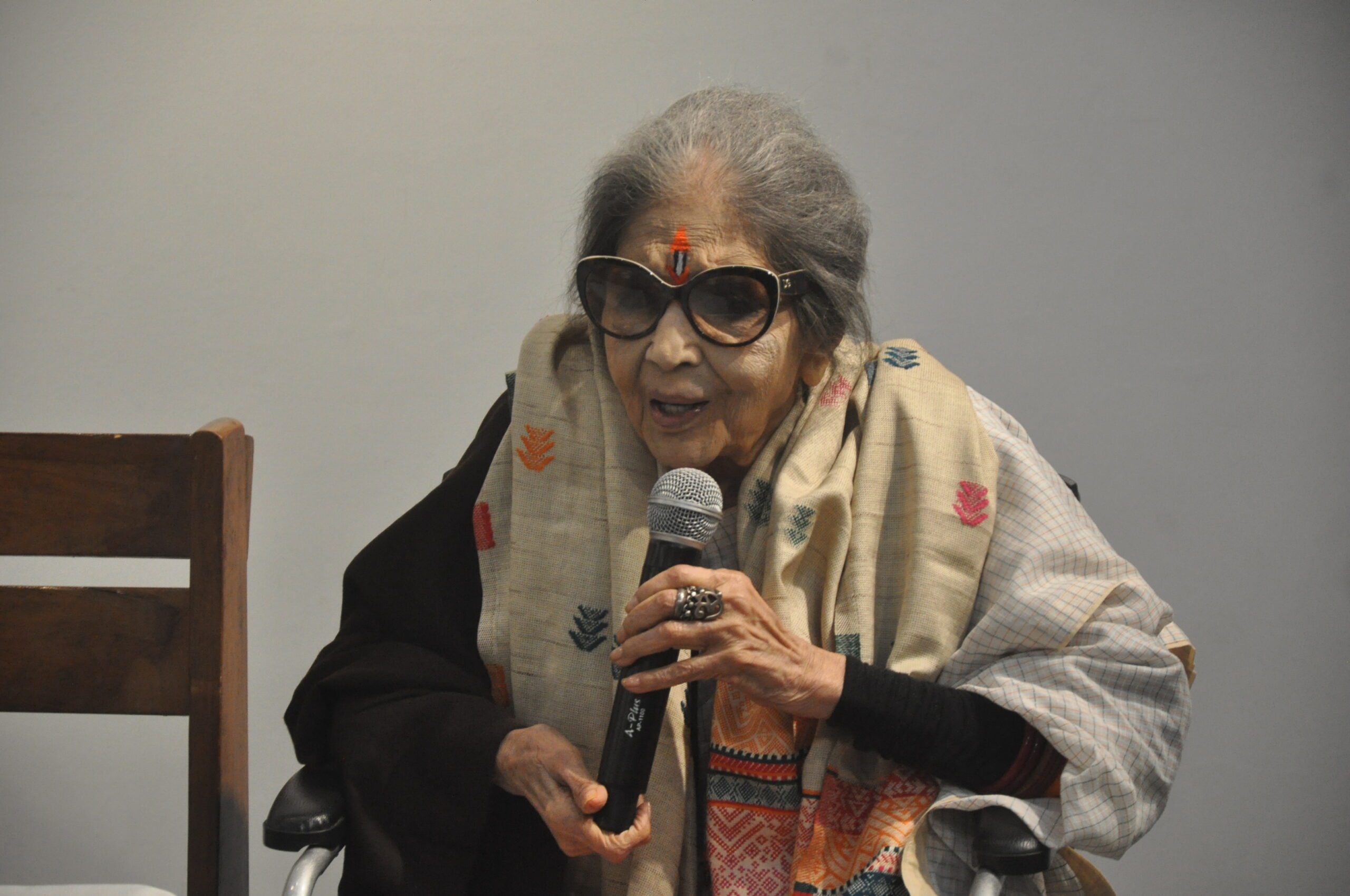
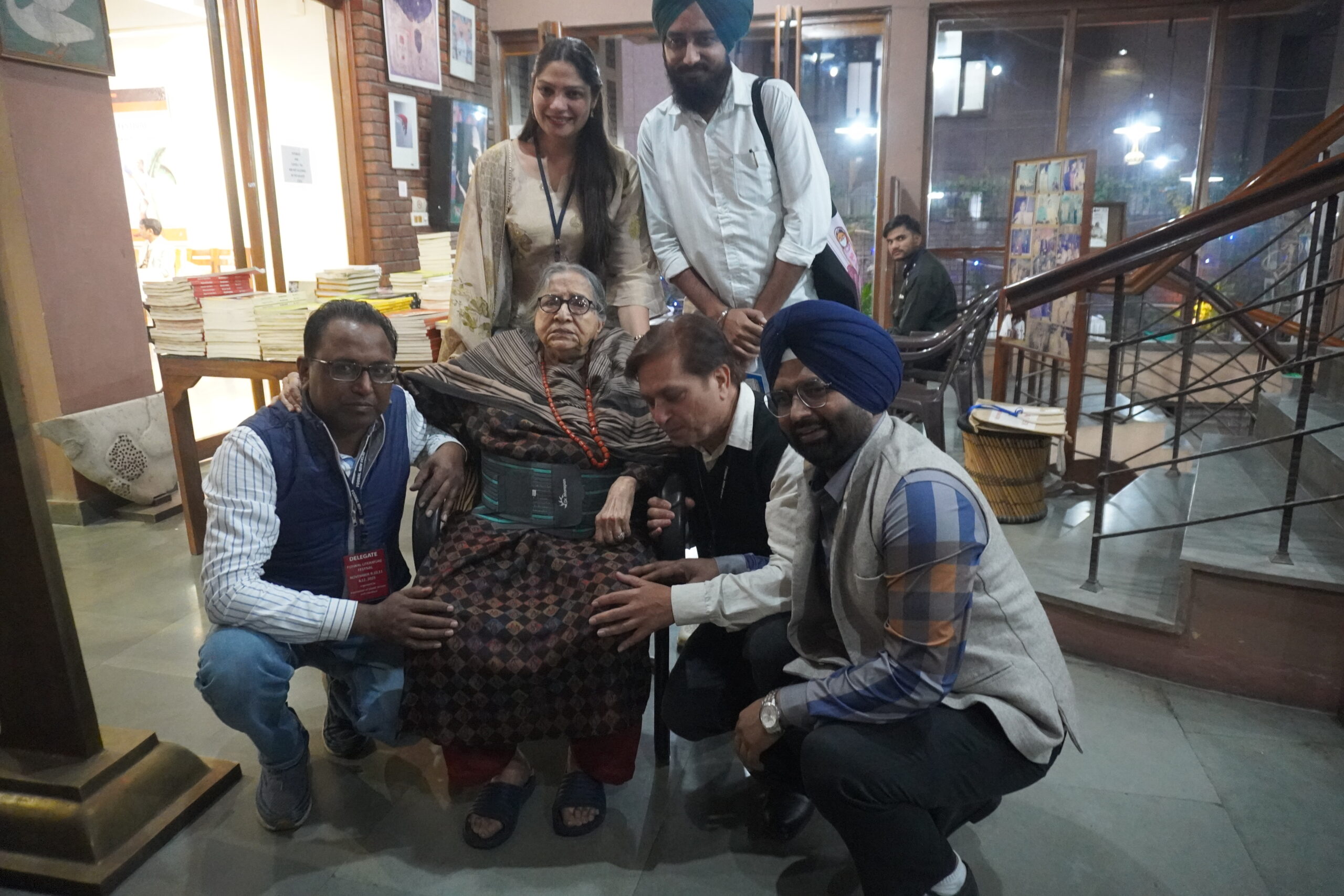
Mrs. Tara Gandhi Bhattacharya, granddaughter of Mahatma Gandhi, who read her poems—an unforgettable moment for all delegates.
Writers & Poets
Across the four days, contributions came from over 150 poets, fiction writers, translators, social thinkers, and academicians, including:
Abhi Subedi (Nepal)
Rinzin Rinzin (Bhutan)
Kamrul Hassan (Bangladesh)
Sushmindar Jeet Kaur (India)
Ibrahim Wahid (Maldives)
Anamika (India)
Ruwan Watawala (Sri Lanka)
Syeda Hameed (India)
Thameera Manju (Sri Lanka)
Sukrita Paul Kumar (India)
…and many more across sessions.
Schedule Highlights
Day 1 — Inaugural & Literary Dialogues
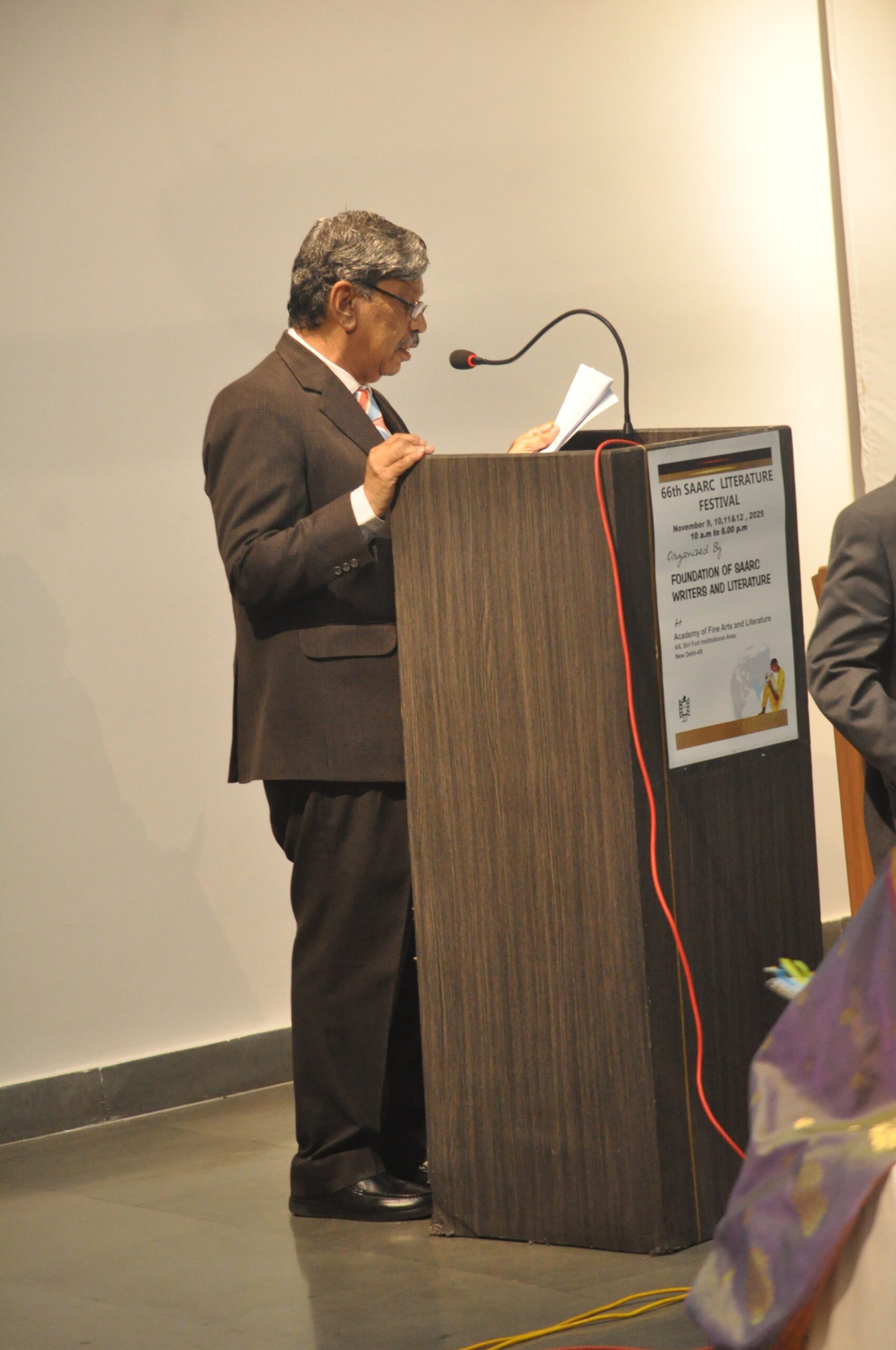
Opening ceremony with speeches by regional diplomats and scholars
Award Ceremony honouring regional literary excellence
Book Launch by Sahitya Akademi President
Film Screening on Ajeet Cour’s literary journey
Sessions on paper presentations, Indo–Sri Lankan poetry traditions, and a gripping talk on Ishrat-e-Qatra
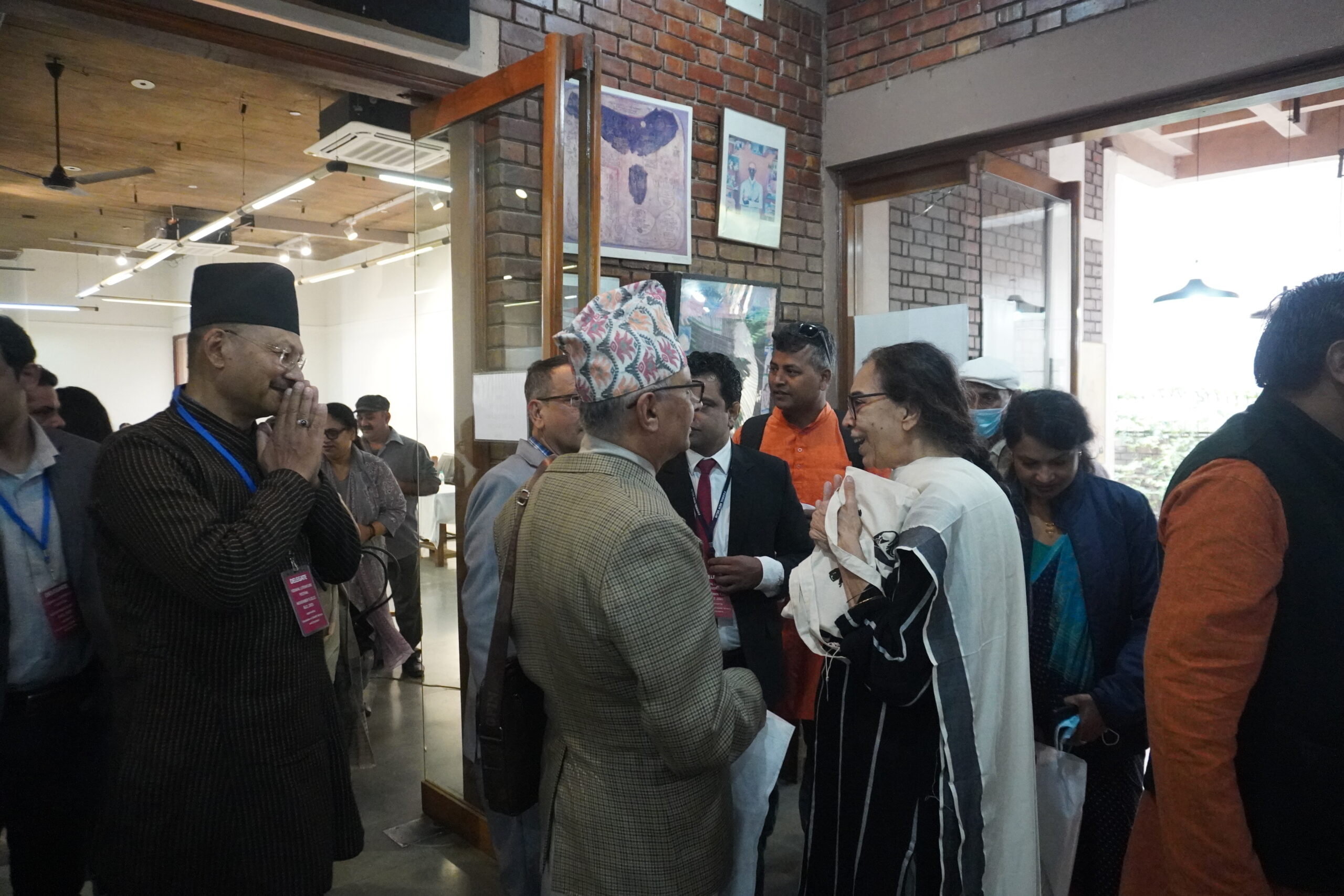

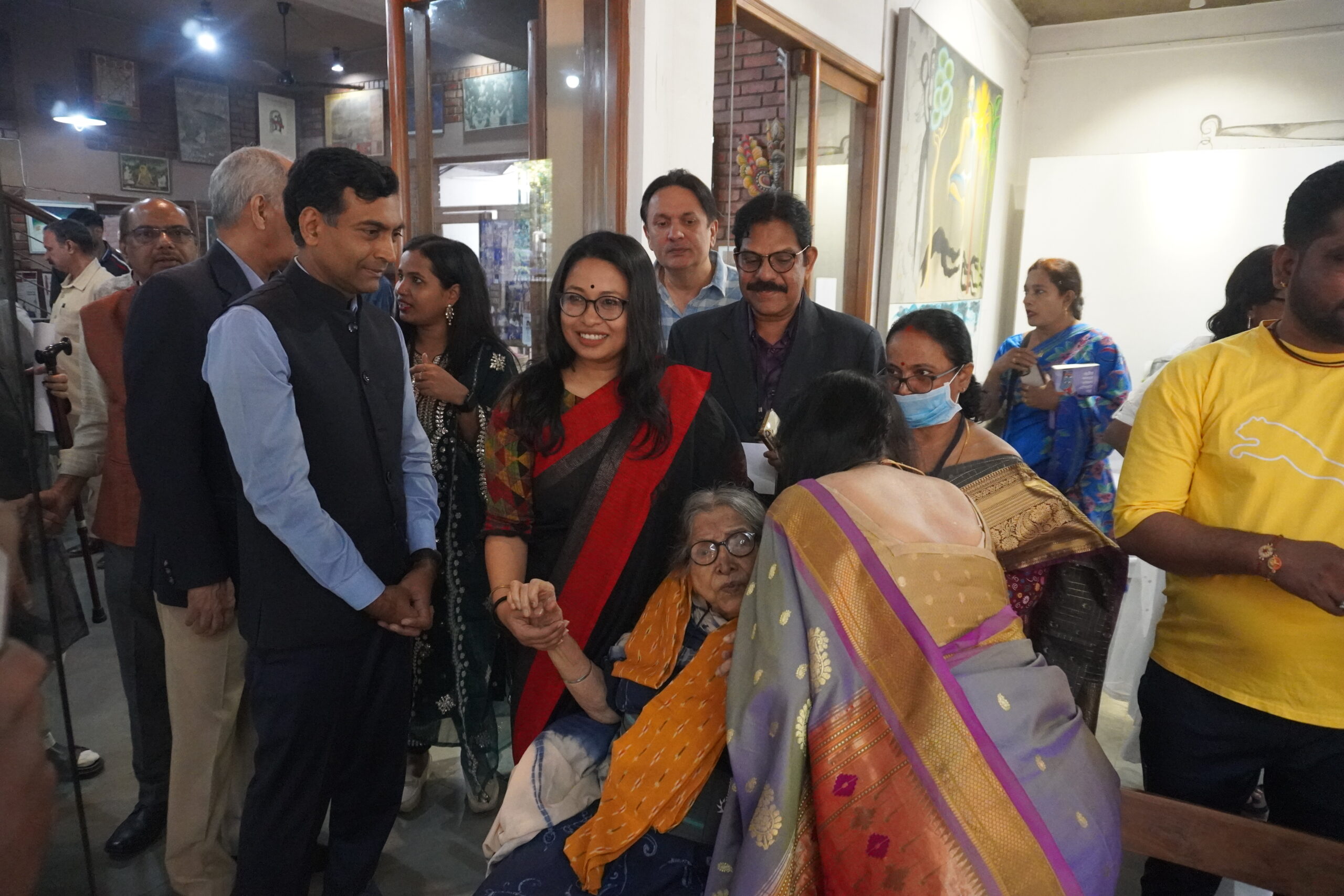
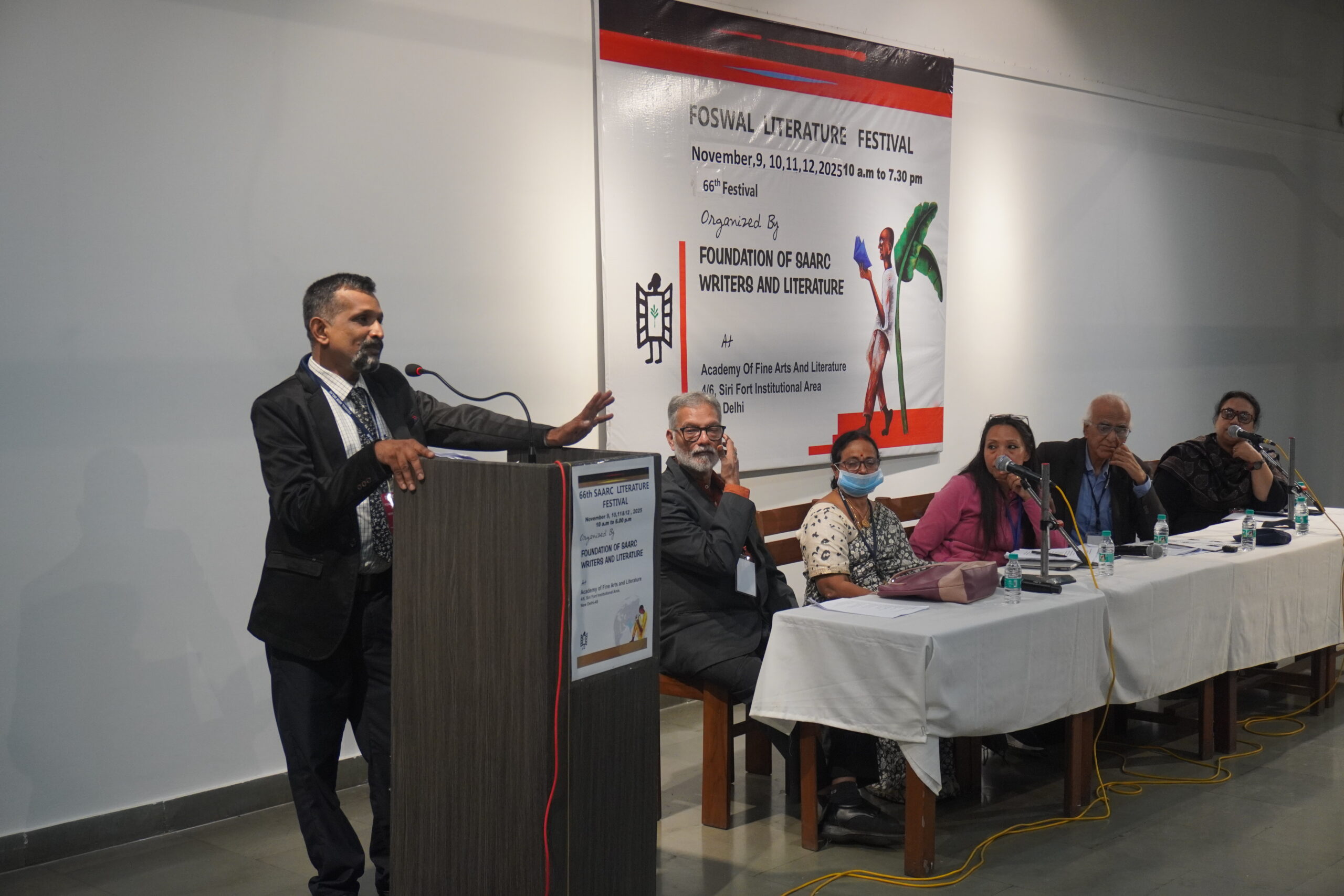
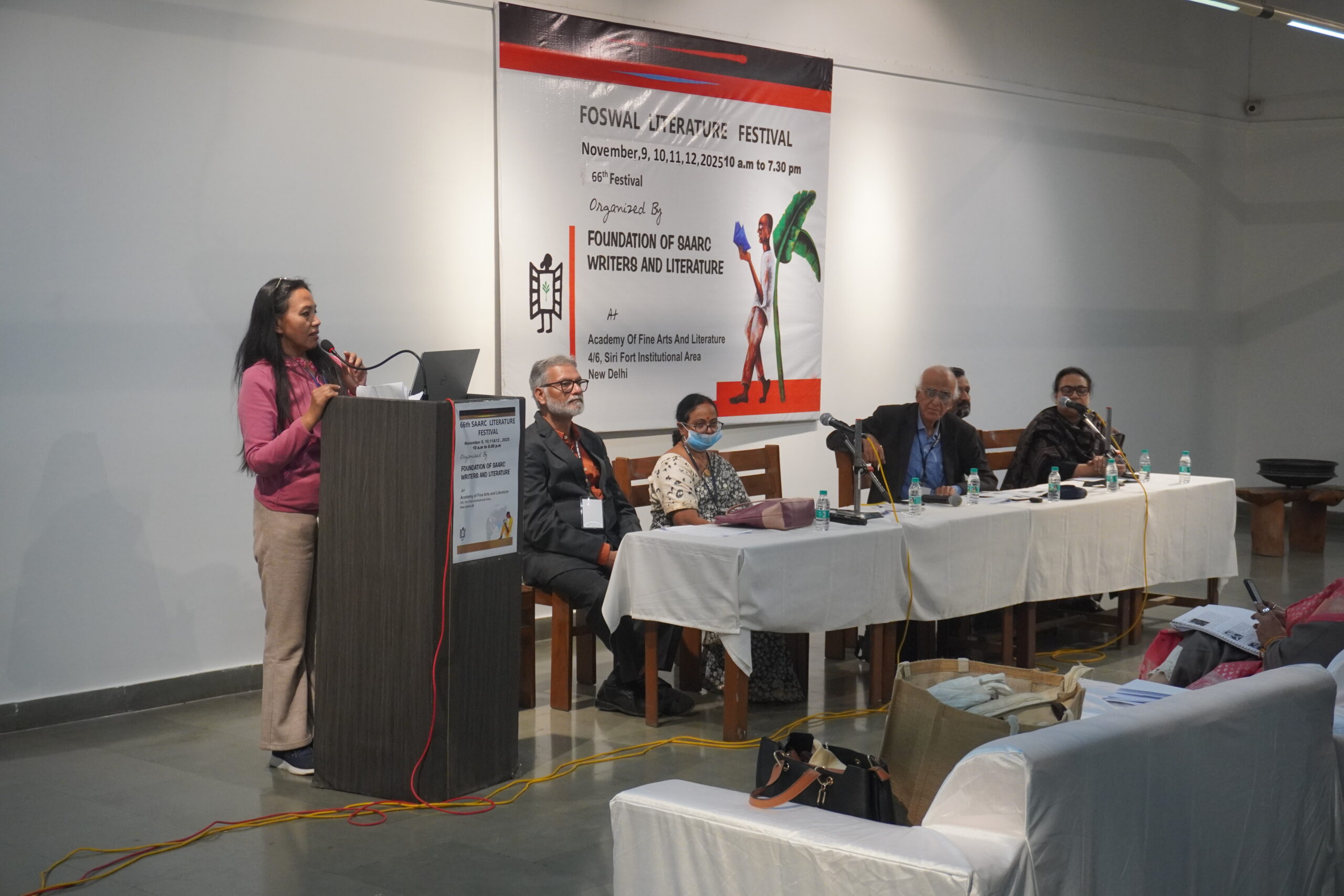
Day 2 — Poetry, Prose & Cultural Papers
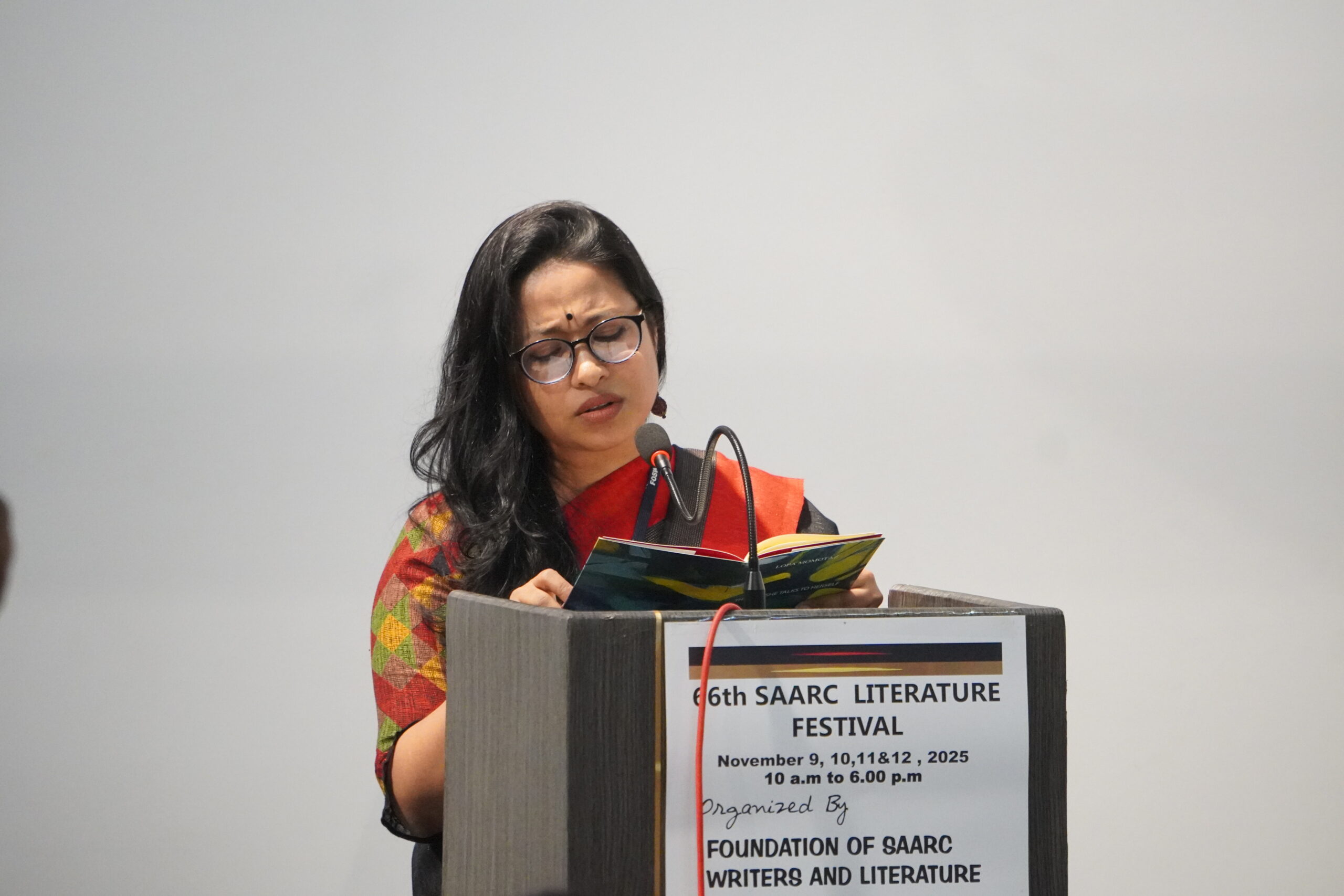
Poetry readings by delegates from all SAARC nations
Papers exploring:
Translation as a cultural bridge
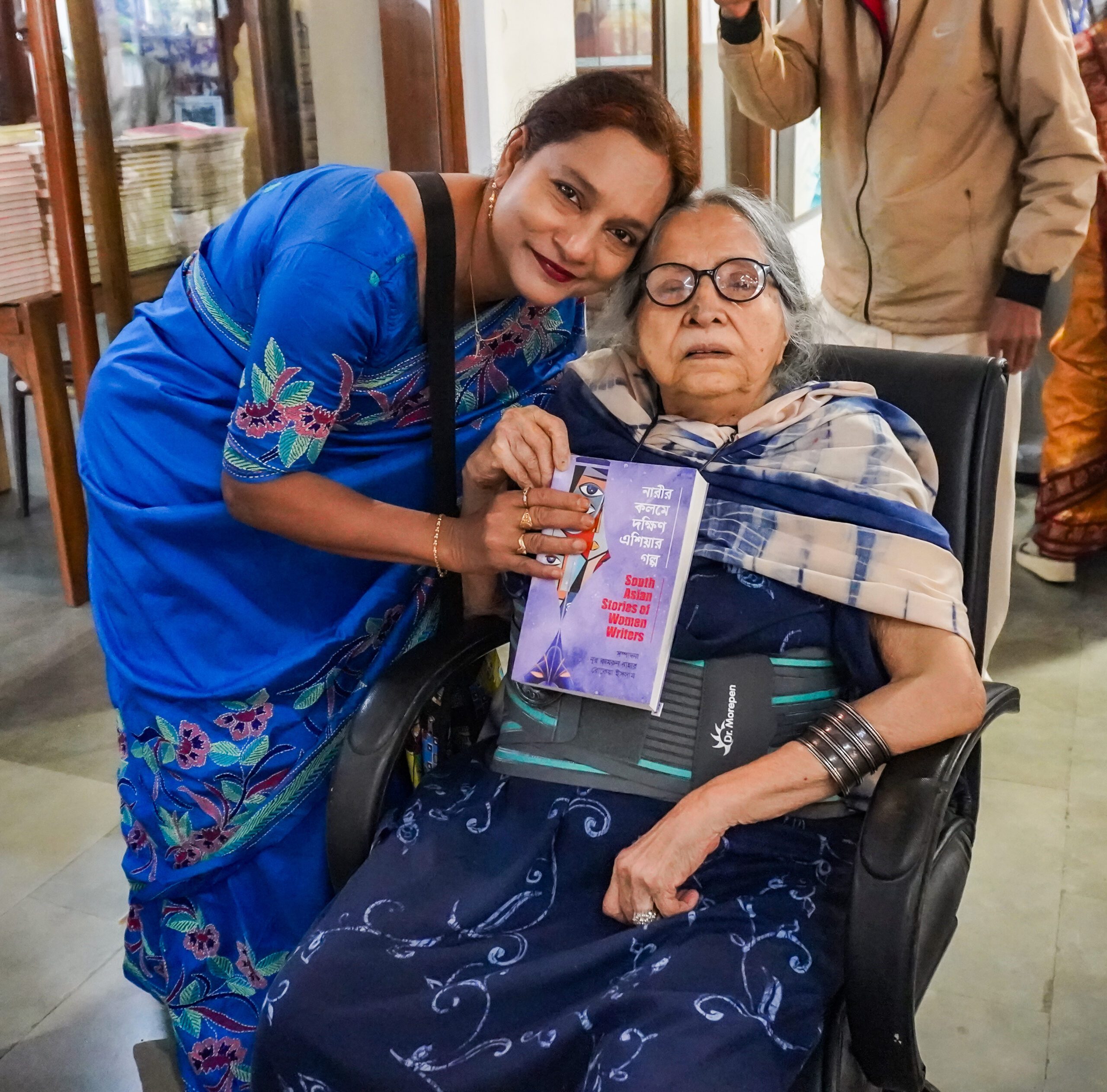
South Asian women’s writing
Environmental storytelling
The role of ego, war, and human resilience in literature
High Tea & cross-cultural networking
Day 3 — Storytelling, Academic Papers & Literary Conversations
Moving stories from Nepal, India, Bangladesh
Papers on:
Power of poetry
Human connectivity in South Asia
Dystopian literature and modern conflict
A special conversation with Kanishka Gupta, one of Asia’s leading literary agents
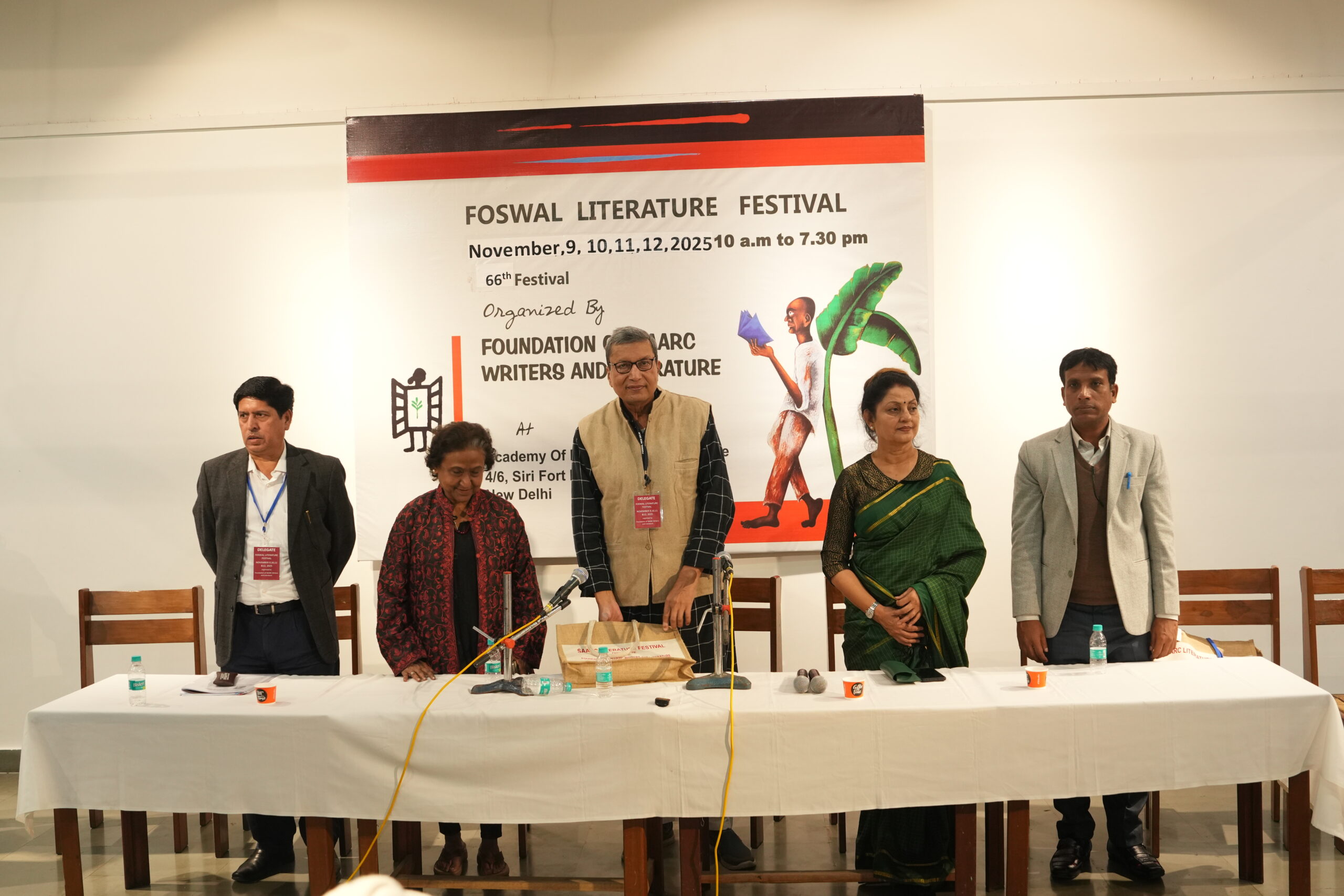
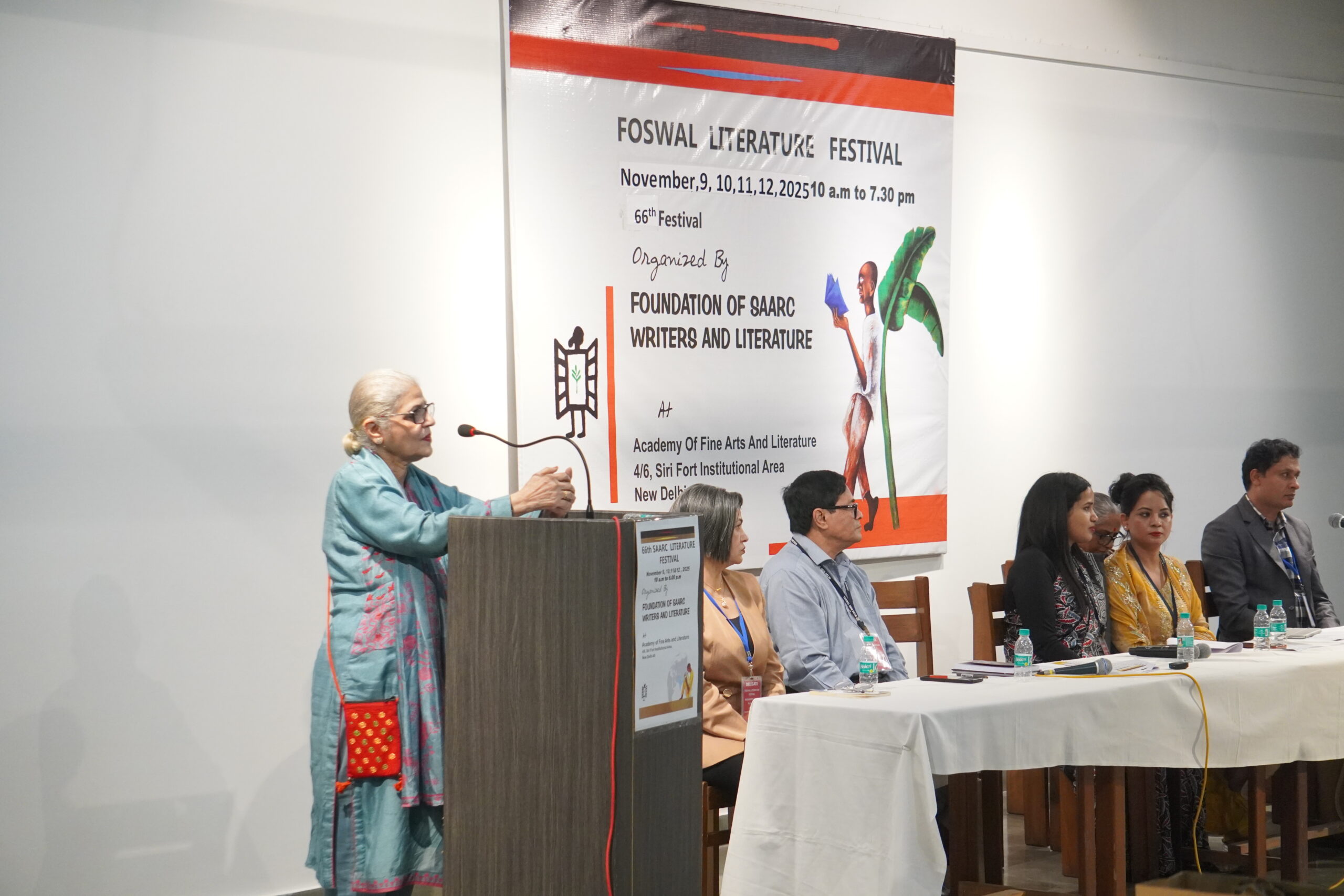
Day 4 — Regional Language Poetry Day
Dedicated to Hindi, Urdu & Punjabi literature—an entire day of regional poetic expression featuring:
Sessions chaired by renowned poets including Dr. Anamika, Shehpar Rasool, and Dr. Rawail Singh
Participation from over 50 Indian poets
Delegates from other SAARC nations took guided heritage tours of Delhi
News Coverage
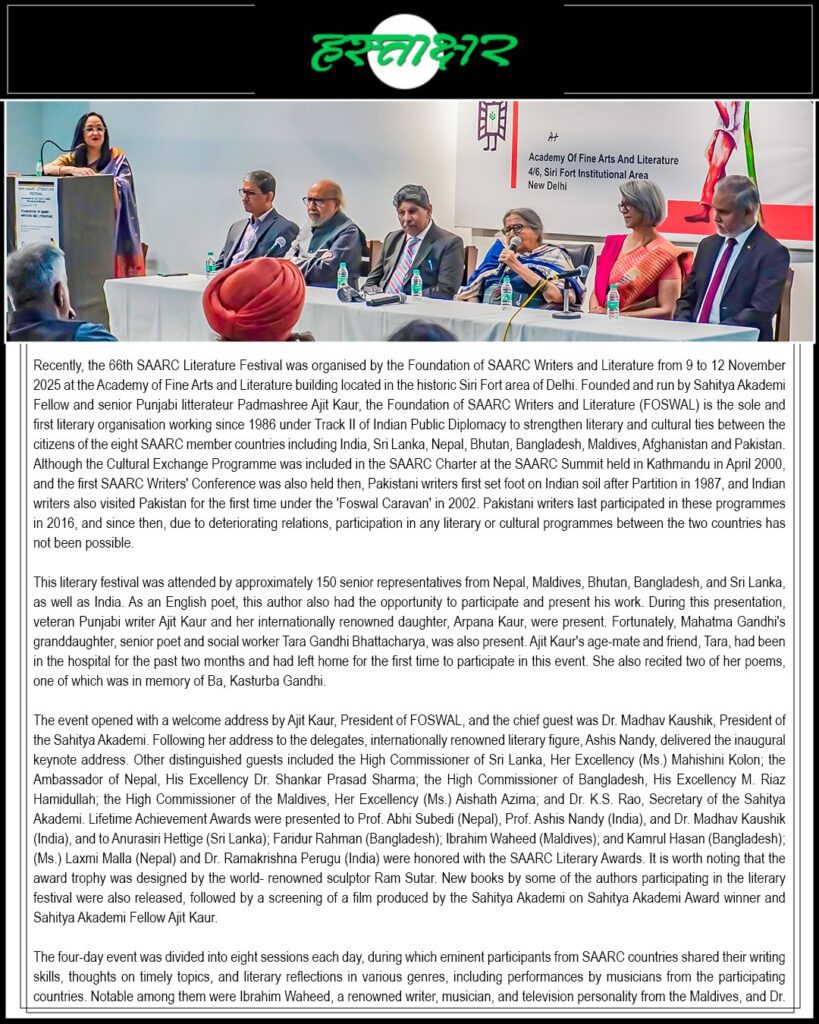
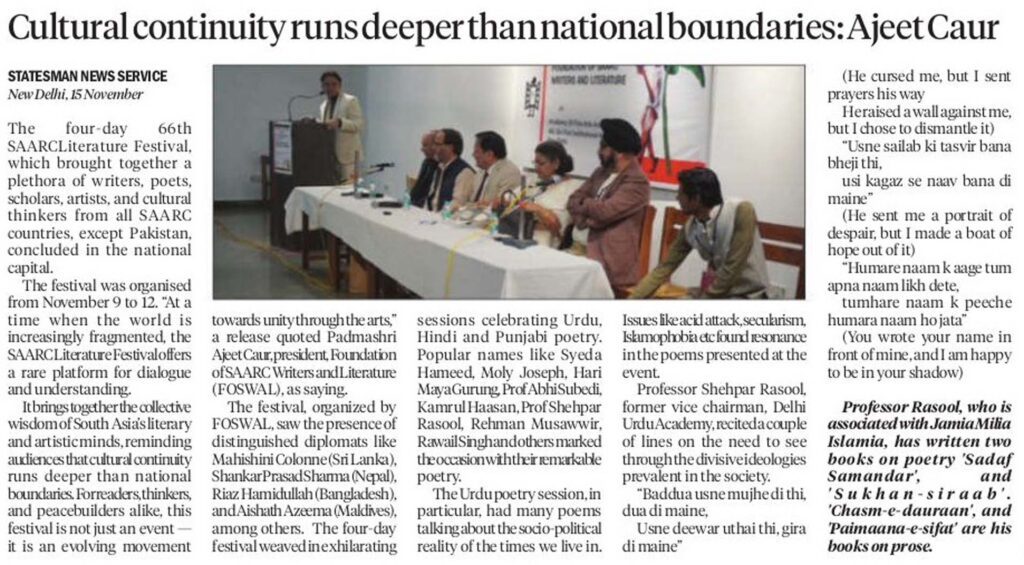
The 66th SAARC Literature Festival garnered significant media attention across South Asia. The Kathmandu Post reflected on Ajeet Cour’s lifelong mission to unite the region’s creative voices, while The Statesman highlighted her message that cultural continuity transcends political boundaries. Hindi literary platform Hastaksher offered an in-depth report on the festival’s sessions, awards, and international participation—affirming FOSWAL’s role in strengthening South Asian literary and cultural dialogue.

Testimonials
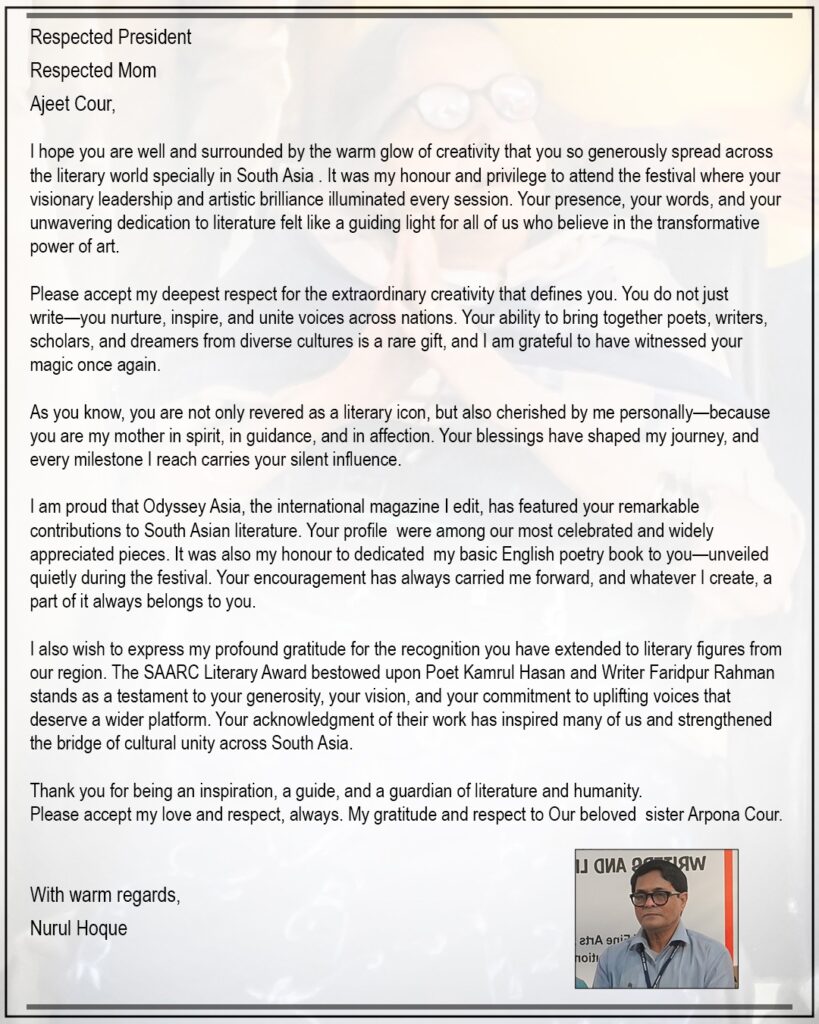
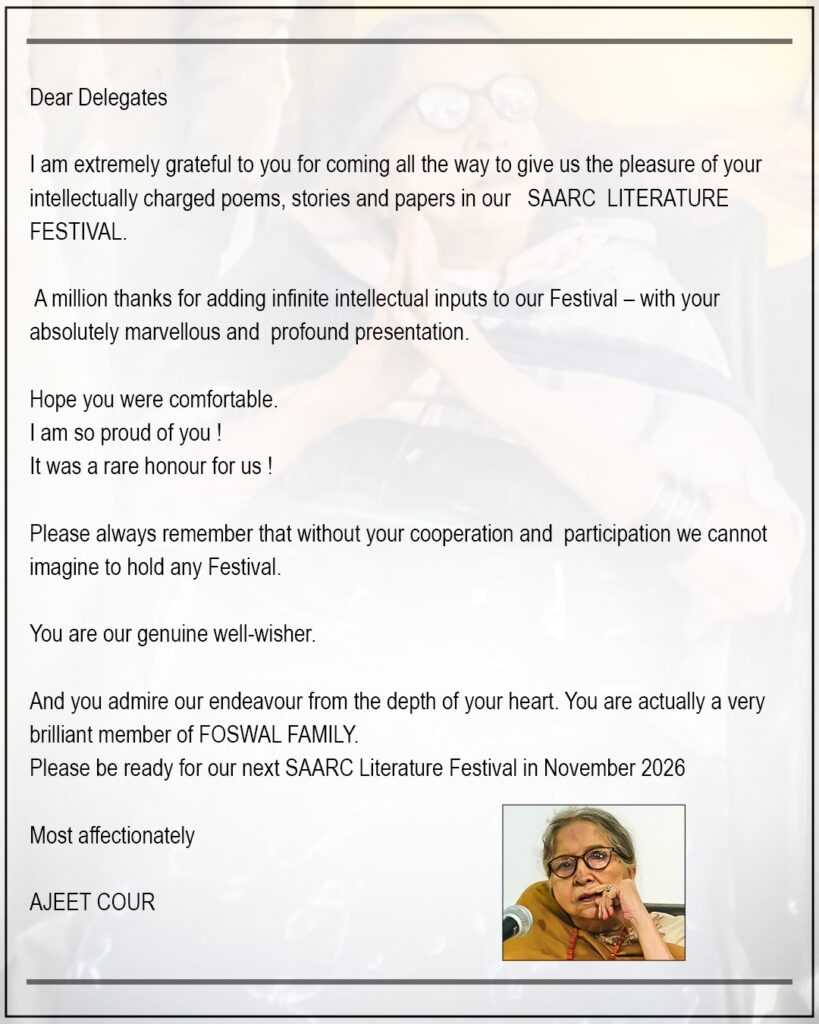
Testimonials
Hear the glorious testimonials of our esteemed guests at FOSWAL.
In Essence
FOSWAL 2025 reaffirmed what the organisation has always stood for:
That South Asia is one cultural civilisation — diverse yet deeply connected.
Through literature, empathy, and shared history, the festival continues to nurture peace, understanding, and unity across borders.
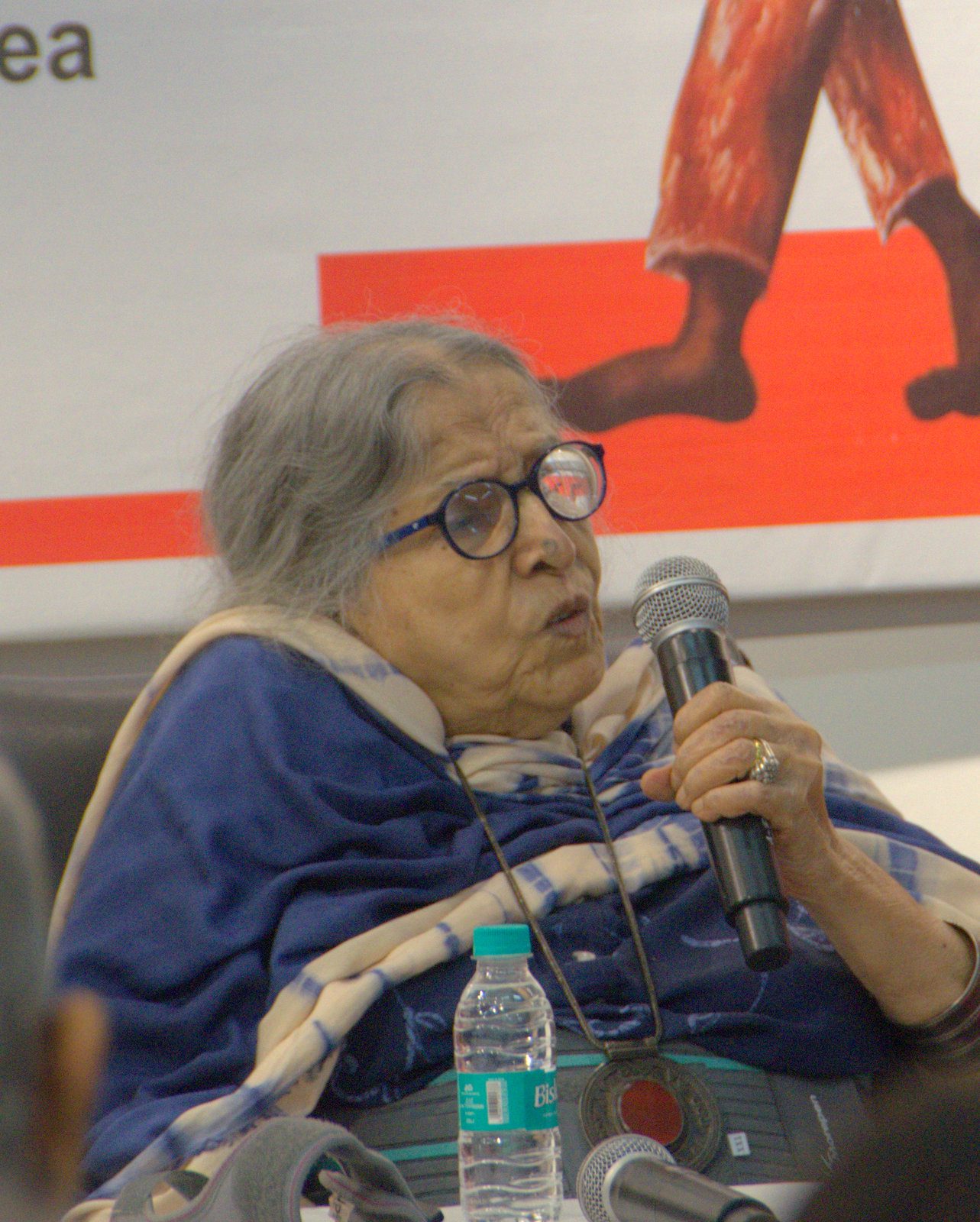
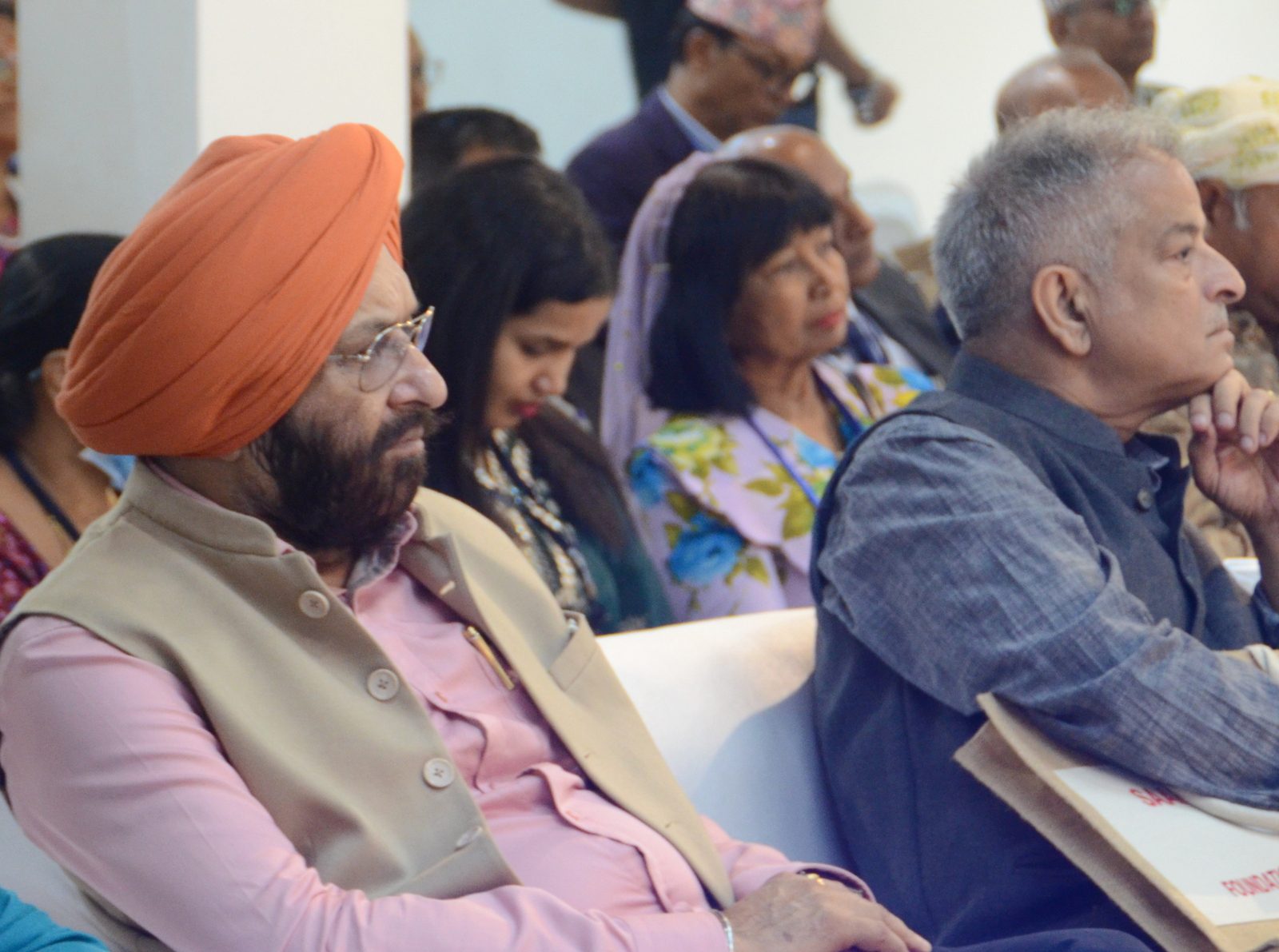

FOSWAL 2025
The 66th SAARC Literature Festival at AFAL concluded with four days of powerful conversations, poetry, storytelling, and cultural exchange — reaffirming FOSWAL’s founding belief that South Asia is held together not only by borders, but by shared memory, language, art, and human values. From eminent scholars and award-winning writers to young poets and first-time delegates, every voice contributed to a collective celebration of regional unity through literature.
To preserve this year’s insights, exchanges, and historic moments, we have made the official FOSWAL 2025 Report available for visitors. The report captures every session in detail, including keynote addresses, award ceremonies, international participation, and the many stories and reflections that shaped this festival. It stands as both a documentation and a tribute — to cultural connectivity, to artistic courage, and to the enduring spirit of the South Asian literary community.